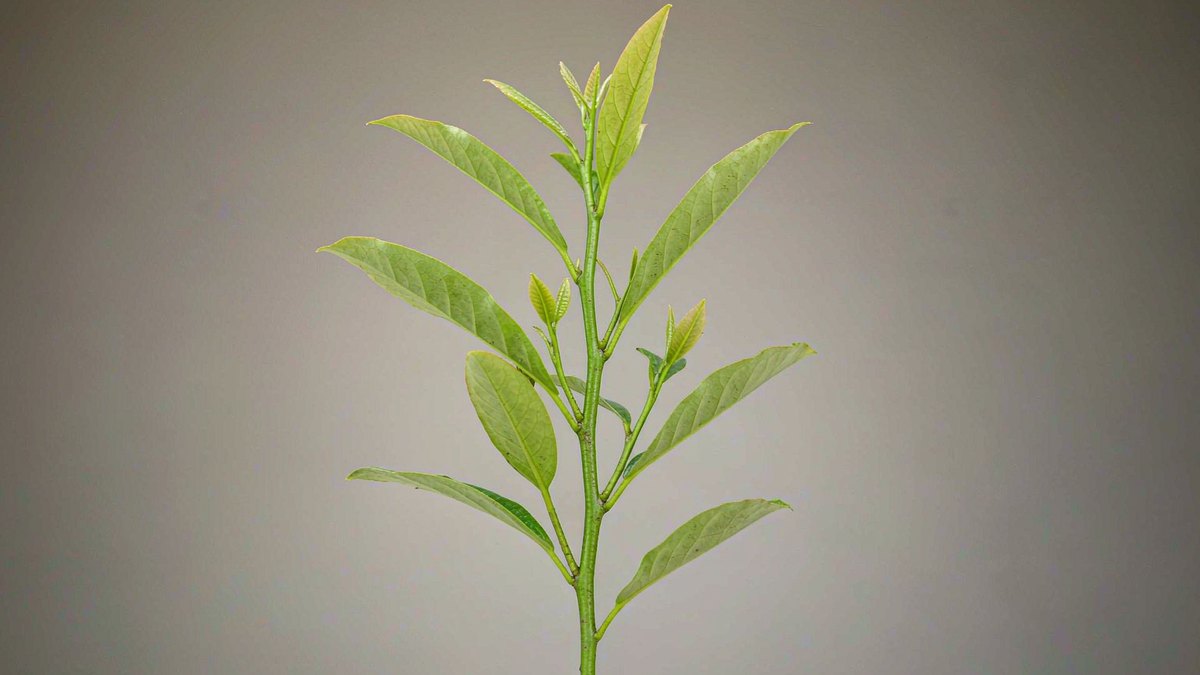
Dianbai Qinan Agarwood: The 'Money Tree' Rewriting the Fate of the Agarwood Industry
From remote mountain forests to iron-fenced protection, from "priceless" to over ten million seedlings propagated annually—the remarkable turnaround of a tiny agarwood sapling.
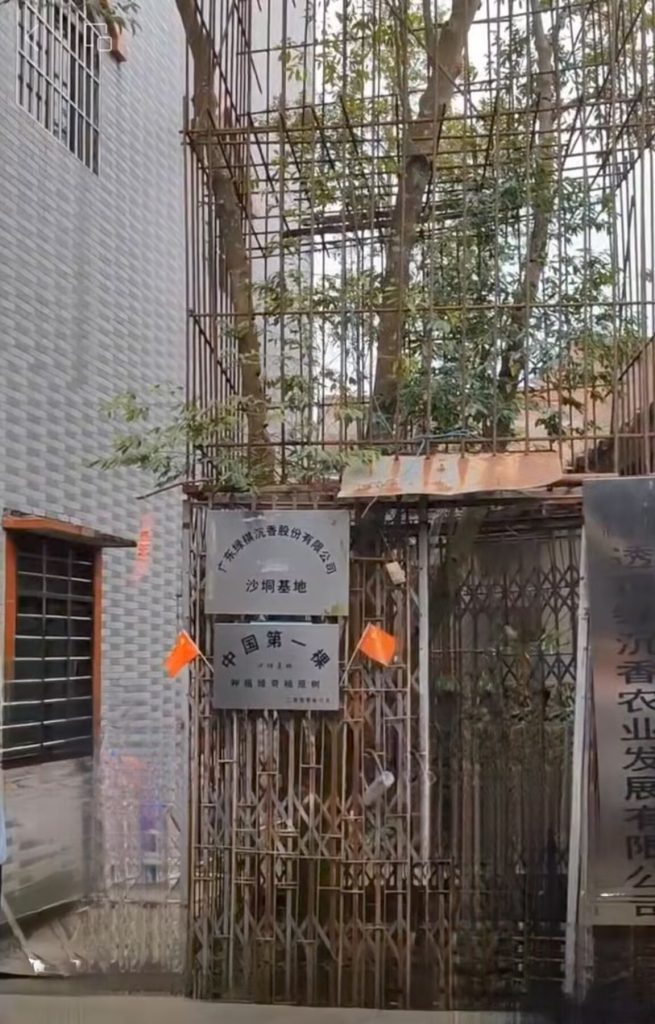
If the overall transformation of the agarwood industry is a "redemption of trust," then the story of qinan agarwood seedlings is the most legendary chapter in that redemption.
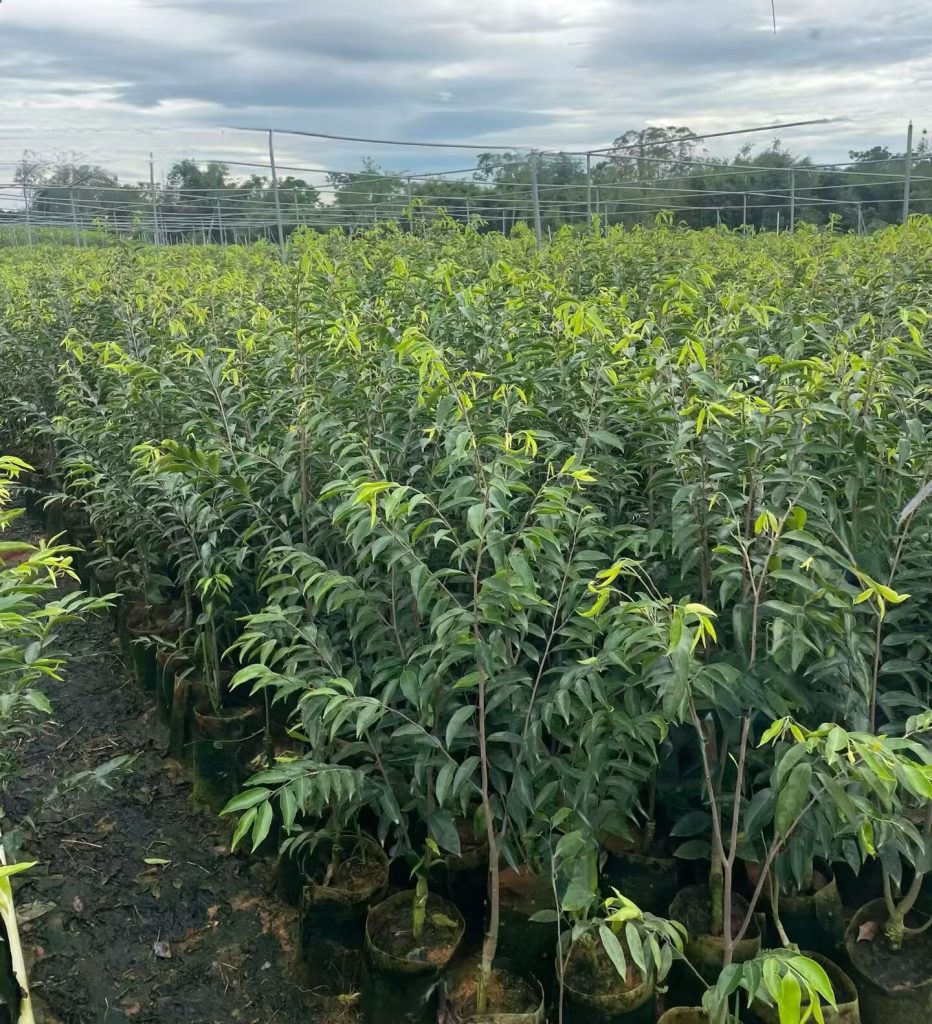
It was once an unrecognized wild tree in remote old-growth forests; today it is protected by layer upon layer of iron fencing and guarded around the clock by electronic alarms. It once nearly "died out" because of seed propagation; today, through grafting technology, over ten million plants are propagated annually, making it the "number one contributor" to rural revitalization.
What exactly has this tiny sapling been through?
Part One: Encountering the "Wonder" in the Deep Mountains
The story begins decades ago. At that time, agarwood farmers in Dianbai still lived the life of leaving their hometowns to collect agarwood. Because local wild agarwood trees were becoming increasingly scarce due to reckless logging, they had to travel far to Huidong, Hainan, and other places to find sources.
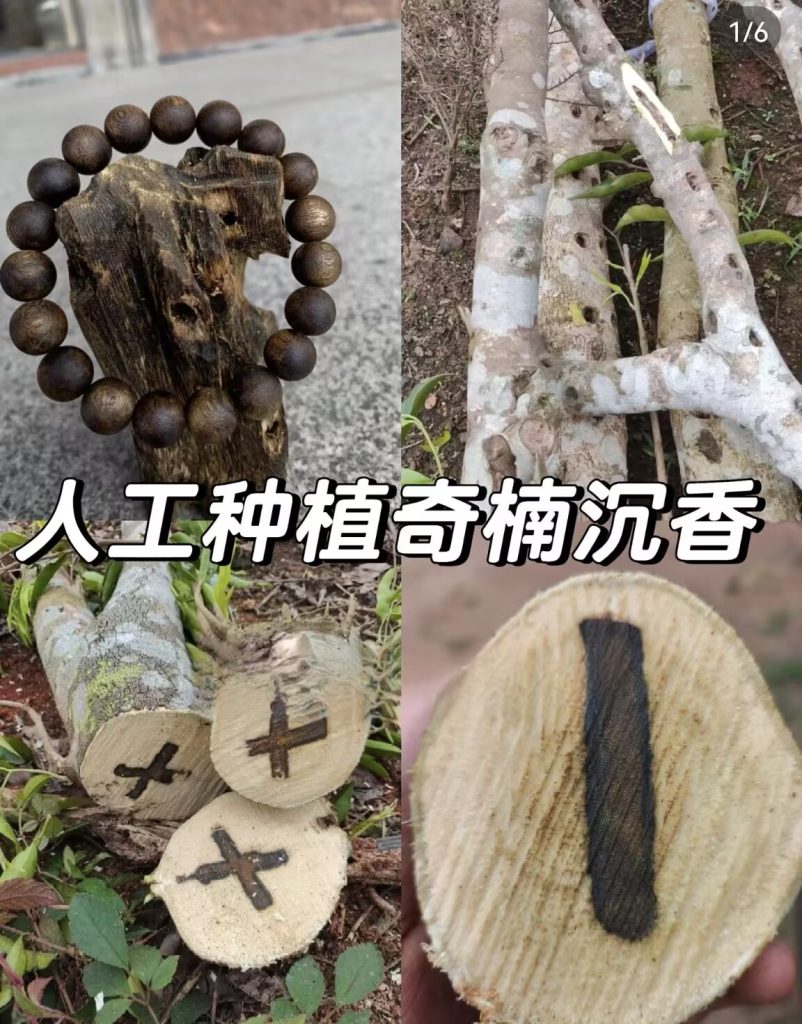
It was in these remote mountains and wild ridges that some agarwood farmersby chance discovered a "different" kind of agarwood—its fragrance was so intense that "you could smell it from across the road," its resin content was visibly high, and a lick with the tongue even produced a numbing, tingling sensation.
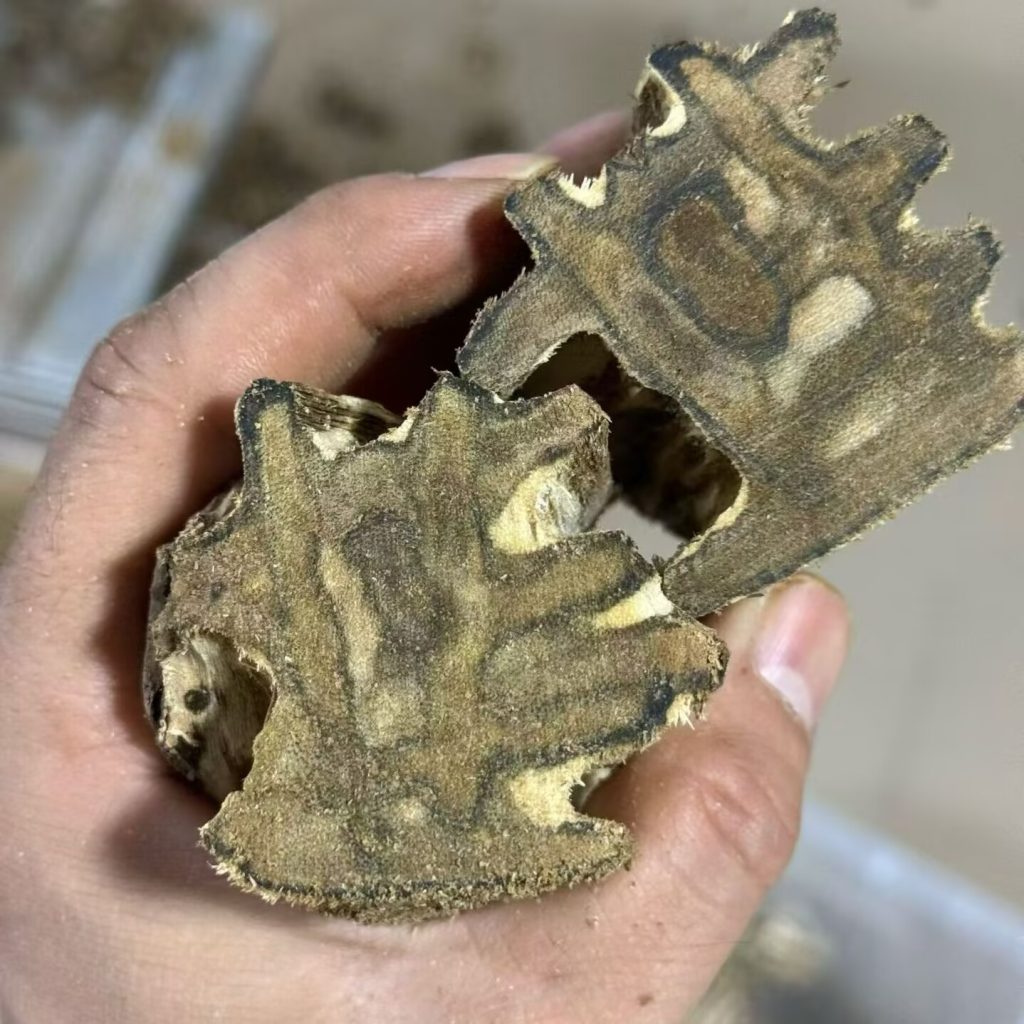
But at the time, no one knew what it was. Veteran agarwood collector Gao Shanji recalled that he once harvested several jin of this agarwood from a tree and sold it at the price of ordinary agarwood. It was not until later, when Japanese merchants came to China specifically to buy "qinan" at high prices for medicinal use, that the farmers realized: they had encountered a top-grade material long ago but had treated it as ordinary goods.
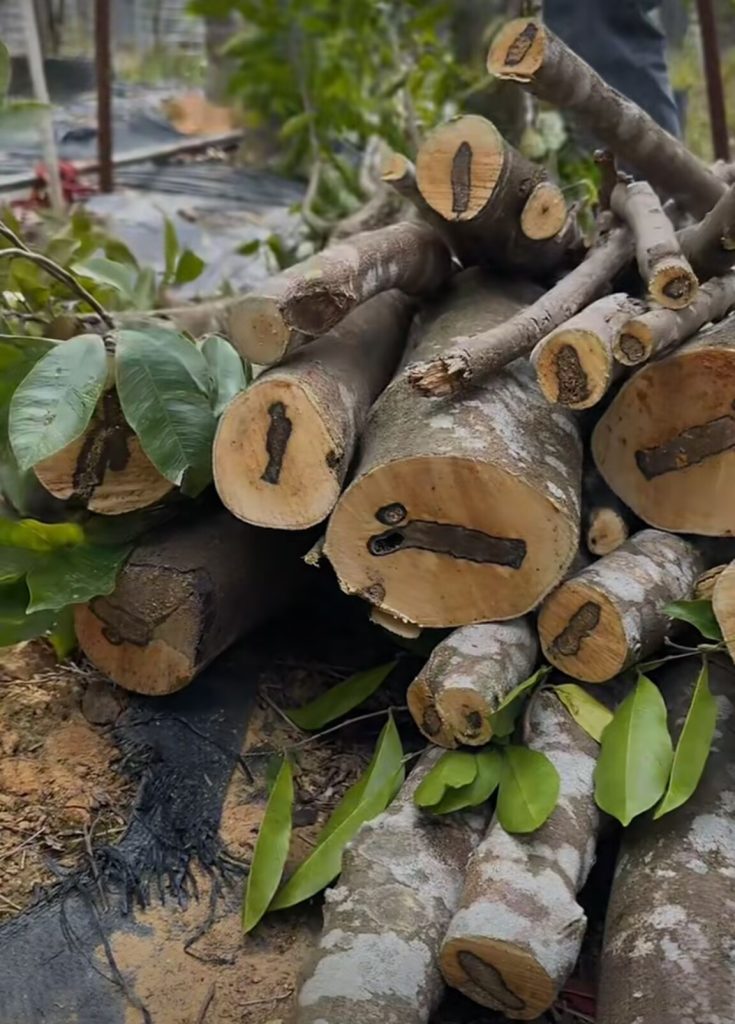
This top-grade material is qinan—the premium variety among agarwood, known in ancient times as "qiongzhi tianxiang," and priceless.
Part Two: The "Golden Age" of the Mother Trees
Once the farmers realized the value of qinan agarwood, a "treasure hunt" began. Between 2008 and 2010, farmers in Guanzhu Town went into the mountains one after another, digging up wild trees of all sizes capable of producing qinan agarwood and bringing them home to cultivate.
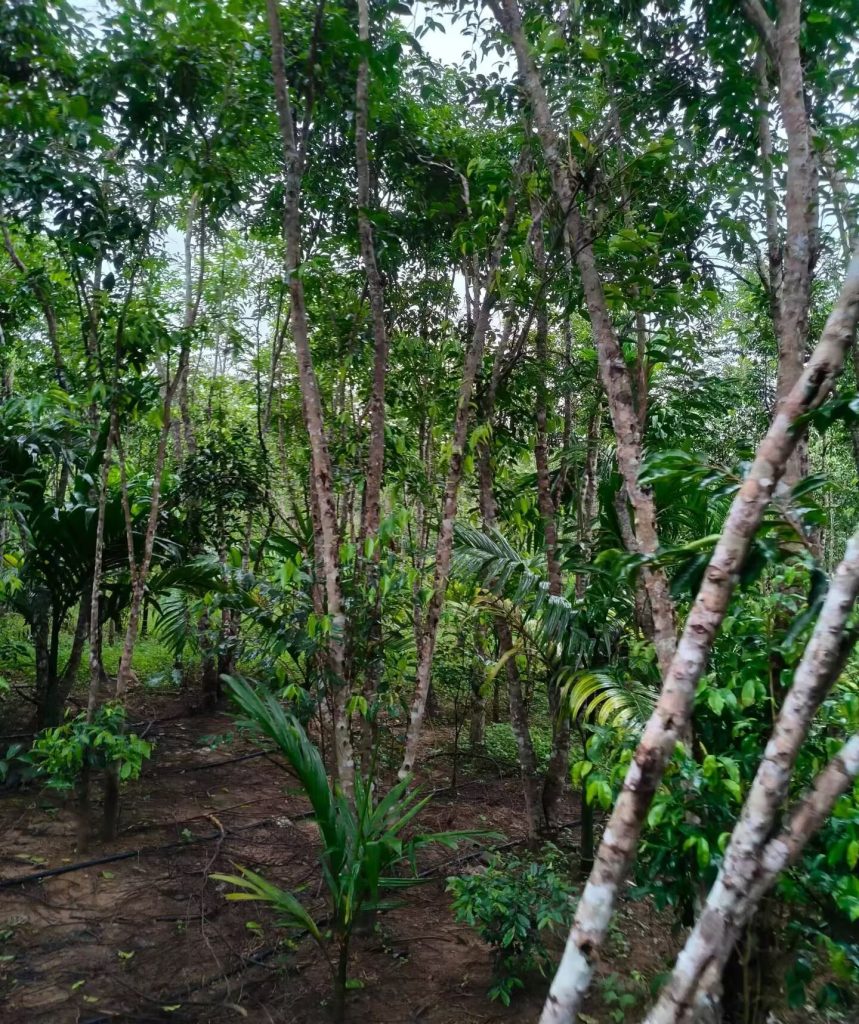
It is said that in Shatong Village alone, dozens of wild qinan "mother trees" were successfully transplanted. These qinan agarwood mother trees have since lived "imperial" lives.
In the courtyard of farmer Wen Zhenxian's home, a qinan mother tree is tightly enclosed by iron fencing. A businessman once offered more than 3 million yuan to buy it, but he refused to sell.
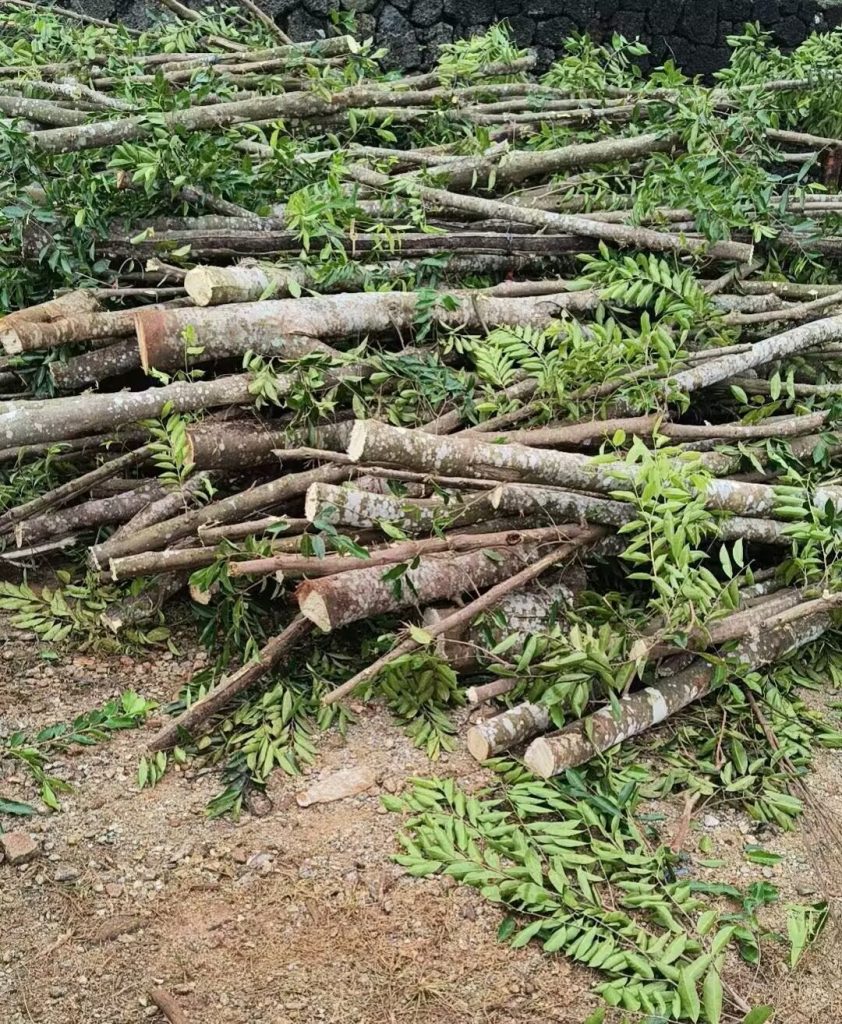
Another farmer, Yan Yongbin, discovered six agarwood trees with unusually formed resin in the deep mountains of Hainan. After many twists and turns, he transported them back roots and all, enclosed them with fencing welded from 8mm-thick steel rebar, and installed electronic alarms. He named these trees "Lüyou Wang" (Green Oil King), making him the local farmer with the most qinan mother trees.
There is also a tree known as "Guangdong's only white qinan mother tree." Its owner, Chen Shenghan, not only installed barbed-wire fencing above the wall but also propped the tree up with thumb-thick square iron supports—protection befitting a national treasure.
Why such tension? Because every qinan agarwood mother tree is a "spark" for an entire industry.
Part Three: The Propagation Dilemma
With mother trees in hand, the next step was "continuing the lineage."
The farmers first thought of seed propagation—the most natural method. But something strange happened: saplings grown from the seeds of qinan mother trees were almost all Aquilaria sinensis, not qinan at all.
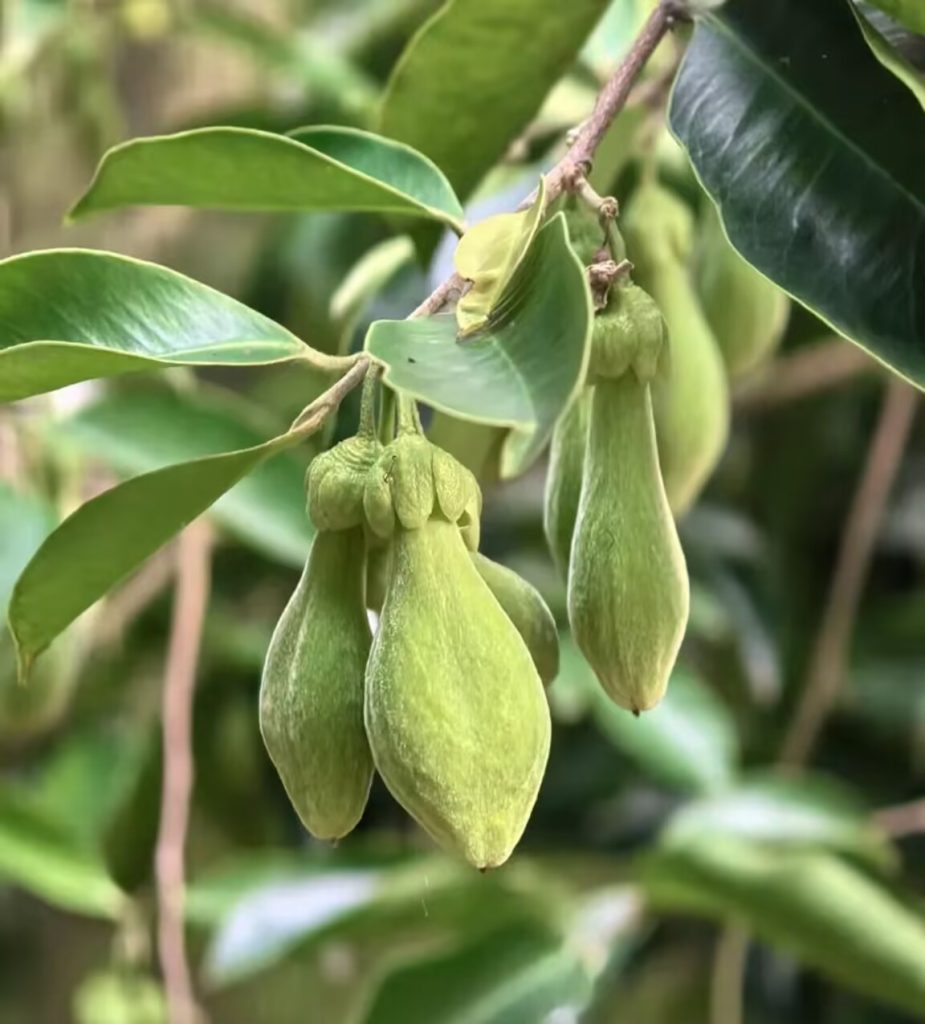
"Out of every 10,000 seeds, perhaps one or two qinan agarwood trees might grow; the rest are all Aquilaria sinensis. Sometimes the probability may be even lower," said Chen Jinming, Party branch secretary of the Dianbai Agarwood Association.
Some speculated whether pollen mixing during bee pollination was the cause. Chen Jinming conducted a dedicated experiment: he covered a qinan tree with gauze netting, placed bees inside for pollination, and completely isolated it from the outside. The result? The vast majority of what grew was still Aquilaria sinensis.
If seed propagation didn't work, they tried cuttings. The result was even worse—the survival rate was essentially zero; the cuttings simply would not root.
Propagating qinan became an unsolvable problem.
Part Four: Breaking Through with Grafting
The turning point came
Compiled for general knowledge; traditional references are cultural notes, not medical advice.
Frequently Asked Questions
What is Dianbai Qinan Agarwood?
From remote mountain forests to iron-fenced protection, from 'priceless' to over ten million seedlings propagated annually—the remarkable turnaround of a tiny agarwood sapling.
How should I choose agarwood?
Buy from traceable, testable channels and match the form (incense, beads, raw wood) to your use. Avoid exaggerated claims such as "wild" or "sinking grade" without proof, and prefer products with lab reports and origin documentation.
How should agarwood be stored and maintained?
Agarwood dislikes moisture, odours and direct sunlight. Keep it sealed, dark and cool, store different origins separately, and air and inspect long-stored pieces periodically against mould and insects.
How can I tell real agarwood from fake?
Authentication combines sensory checks with technical ones: natural agarwood has a clean, long-lasting, cool-sweet scent and burns with pale, non-pungent smoke. GC-MS analysis of characteristic compounds (chromones, sesquiterpenes) adds objective confirmation. Buying through traceable channels with certificates lowers the risk.
How do agarwood origins differ?
Climate, tree species and resin-induction methods give each origin a distinct scent profile — for example Hainan tends to be clean and elegant, Vietnam sweet and cool, Indonesia deep and full. Origin is a key factor in grading and pricing.
What is the current agarwood market like?
Prices diverge sharply by resin density, origin and form, with both top-end collectibles and entry-level consumer products active. Use actual transactions from legal, testable channels as reference rather than a single quotation.
What is the relationship between agarwood and incense culture?
Agarwood is the core medium of East Asian incense culture, spanning temple offerings, literati gatherings and contemporary lifestyle aesthetics. Understanding this cultural background helps explain its value.
Does agarwood have health benefits?
Traditionally agarwood has been used for calming and sleep-related rituals, but evidence quality and dosage need careful reading. Keep traditional use and scientific evidence clearly separated and follow professional guidance.
参考资料
You may also like



评论区
评论匿名可浏览,登录后可发表;提交后先审后显。
评论加载中…