Agarwood: The Chemical War Between Plants and Fungi
Among the four great spices of ancient China—agarwood, sandalwood, ambergris, and musk—agarwood ranks first and is also the most mysterious. Sandalwood comes from sandalwood trees, ambergris is produced by the digestive system of sperm whales, and musk is a secretion from the glandular sac of male musk deer. Agarwood, by contrast, though it "forms" in agarwood trees, is not secreted by every tree the way pine resin is; only one tree in hundreds or thousands will "produce" agarwood, which makes it all the more rare and precious—hence the sayings "diamond among plants" and "a single piece worth ten thousand coins."
The aroma profile of agarwood is elegant, mellow, and ever-changing when burned. Since Zhang Qian's mission to the Western Regions opened the Silk Road, spices began entering the Han dynasty court and were treasured by generations of nobles and officials. Yet only with the development of modern botany, microbiology, and biochemistry has the mystery of agarwood gradually been solved.
Agarwood trees grow in the tropical rainforests of Southeast Asia. Most agarwood wood itself has no fragrance and is loose-grained. If an agarwood tree is "injured"—by lightning strikes, hurricane breakage, insect or animal bites, or axe and saw—it secretes resin and gum to heal the wound. However, these secretions do not naturally turn into agarwood.
In the 1980s, researchers at the South China Institute of Botany, Chinese Academy of Sciences, discovered that resin formation occurs only when the wound is infected by certain little-known fungal species such as yellow-green Melanotus fungi, forming a "lesion."
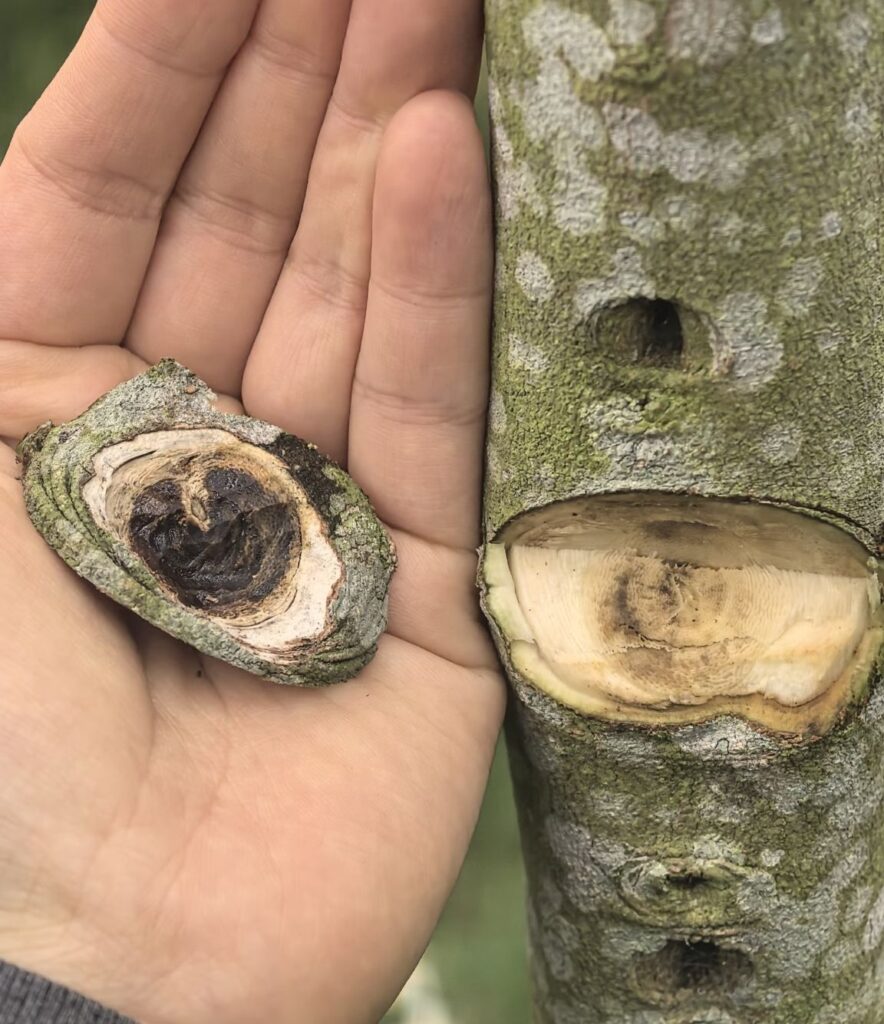
This is a silent "biochemical war": various fungi multiply and spread in large numbers, and the agarwood tree resists instinctively. The result is that they become entangled, each within the other, finally forming a new substance—benzylacetone.
Over time, benzylacetone eventually forms sesquiterpenes and chromone compounds. Analysis shows that these two classes of compounds can break down into at least hundreds of components. These oily substances mixed with wood fiber are what we call agarwood.
This "war" continues for decades or even centuries before a dark brown, oil-rich, water-sinking premium agarwood can form—showing just how rare agarwood is. As early as the Song dynasty, Cai Tao wrote in his book Tieweishan Congtan: "A single piece of agarwood is worth ten thousand coins." At that time, incense appreciation, tea competitions, flower arranging, and hanging paintings were the "four leisure pursuits" of the aristocratic scholar-official class.
Agarwood trees belong to the genus Aquilaria in the family Thymelaeaceae and have demanding growth requirements. They grow mainly in the tropical rainforests and some subtropical regions of Southeast Asia. Because of differences in species, subspecies, and variants, agarwood is divided into many varieties: that from Vietnam and surrounding areas is called "musk agarwood"; that from Indonesia, Malaysia, and Singapore is called "Xingzhou agarwood"; and agarwood from China's Hainan, Guangdong, and other places is called Aquilaria sinensis and "daughter's agarwood."
According to legend, Dongguan once produced large quantities of agarwood historically, and local girls customarily wore agarwood, so agarwood is also called "daughter's agarwood." After centuries of harvesting, wild agarwood forests have become a scarce resource, and six species of agarwood trees are listed internationally as "endangered species."
At present, only Vietnam, Indonesia, Malaysia, Laos, Cambodia, and China's Hainan Province have small numbers of natural agarwood trees; most other regions have saplings planted artificially over the past decade or so. However, agarwood is not synonymous with high-end consumption—in recent years, products of ordinary grade have gradually entered people's daily lives.
Agarwood was first known to the Chinese as a medicine. In medical classics such as the Compendium of Materia Medica, it is recorded that agarwood has the effects of "lowering qi and regulating the middle, warming the kidneys and relieving pain, improving qi reception and calming asthma, and enriching blood and strengthening the heart," and can treat chest and abdominal pain, deficiency-cold of the lower back and knees, vomiting and hiccups, deficiency-type constipation, and qi strangury of urination, and is especially beneficial to the hearts of middle-aged and elderly people.
The well-known "Suxiao Jiuxin Pill" contains agarwood.
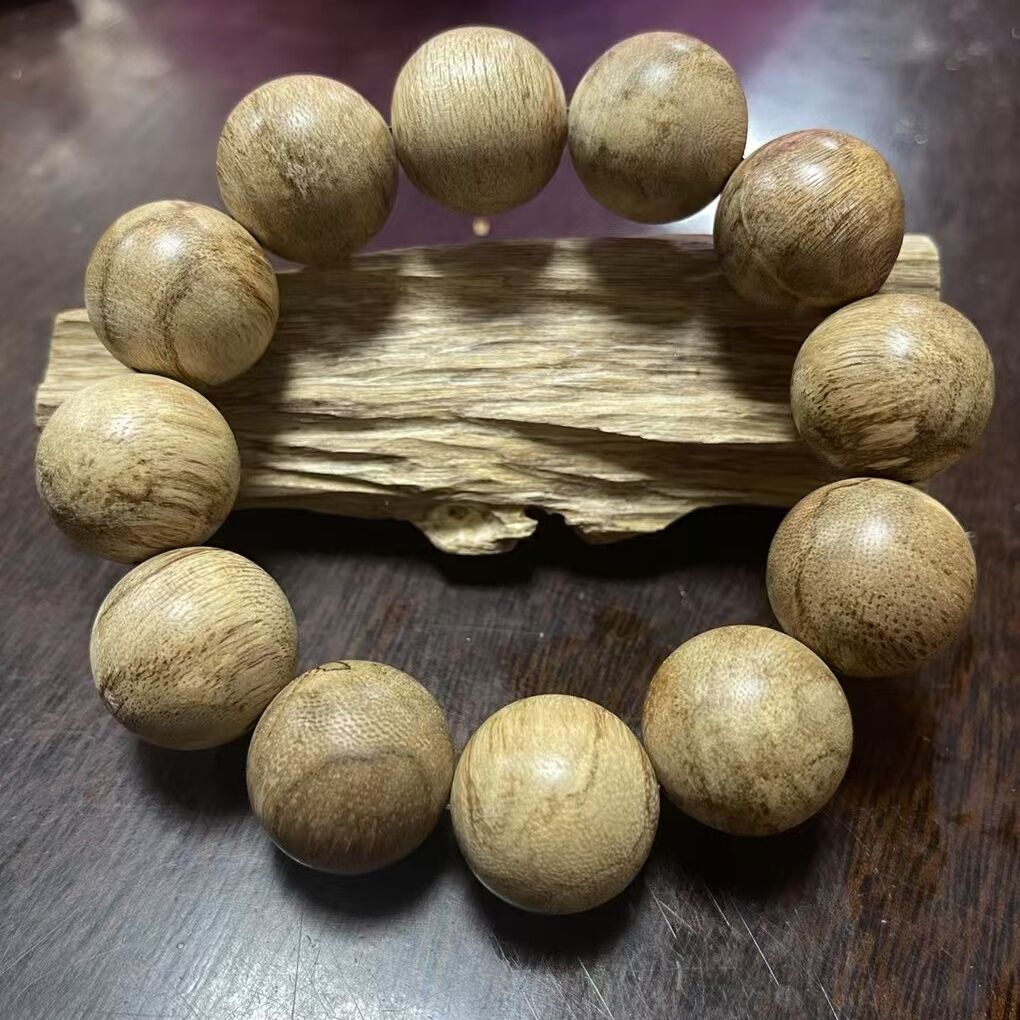
Agarwood ranks first among all fragrances under heaven. Its aroma is rich, stable, and lofty, with strong volatility and penetration; it is an indispensable stabilizer and fixative in perfumes and essential oils—without agarwood, there would be no world perfume industry. Agarwood is also a sacred substance revered by the world's five major religions—Christianity, Catholicism, Taoism, Islam, and Buddhism. In large religious ceremonies, its curling smoke and peerless fragrance are often used to create a solemn and dignified atmosphere, and people believe it is a special medium for communicating with the divine. In major museums around the world, one can see agarwood carvings left from centuries and millennia past. More and more people are beginning to wear agarwood ornaments—bracelets, pendants, display pieces, and hand-played objects. With one piece in hand, the fragrance assails the senses, calming the mind and nurturing one's nature.
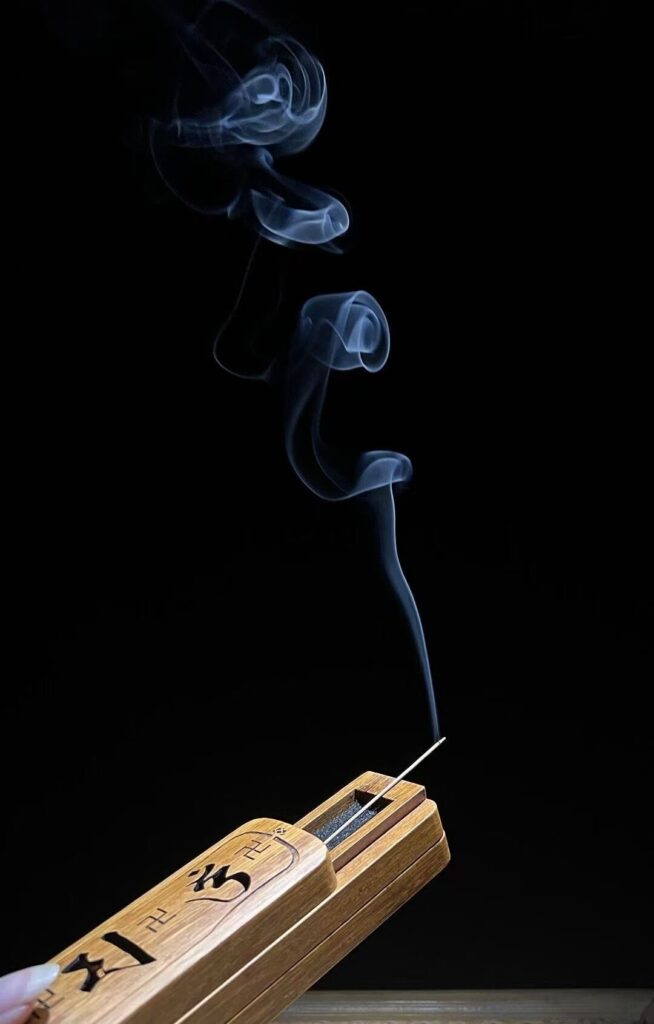
Today, if conditions and interest permit, one can light a small stick of fine agarwood (incense sticks, coil incense, or cone incense) in the living room, study, or bedroom. The wondrously shifting fragrance drifts quietly, permeating every inch of space and refreshing the mind. Receiving guests and tasting tea or writing poetry and painting amid the blue smoke and subtle fragrance is a rare elegant pleasure in the bustling city.
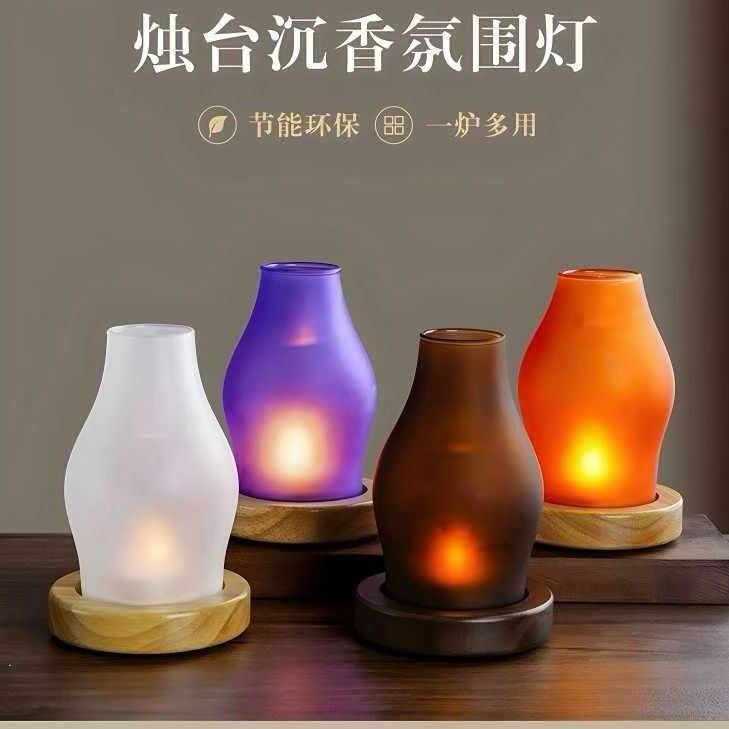
Burning incense is the traditional way of appreciating fragrance. At least by the Ming dynasty, in addition to the four treasures of the study and the arts of qin, chess, calligraphy, and painting, literati and scholar-officials had developed the "three items of the censer and vase" arrangement: when burning incense, a censer was placed in the middle, with a chopstick vase and an incense box on either side. The chopstick vase held copper chopsticks and a copper spatula, while the incense box stored incense powder or incense sticks. Emperor Xuanzong of Ming personally supervised the refining of a batch of censers from brass tribute from Southeast Asia—the famous "Xuande censers."
As agarwood gradually becomes a new favorite for collectors, fraudulent practices such as passing off inferior goods as superior and selling counterfeit products have also become widespread. More than 70 percent of the so-called agarwood on the market today does not live up to its name.
There are several criteria for judging agarwood quality. First is fragrance: premium agarwood has a barely perceptible scent at room temperature, but when heated or burned it becomes rich, cool, and long-lasting, with abundant variation. Second is resin formation: the denser the oil, the heavier the quality, and the best sinks in water. Third is origin: agarwood from Vietnam and China's Hainan is of the best quality, with qinan being the finest; Indonesia, Laos, and Cambodia come next, followed by Malaysia. Fourth is form: shape is formed at the time of resin formation, and afterward, no matter how long it takes, only density increases, not volume. Ninety percent of agarwood consists of small fragments; good shapes are rare and cannot be sought. Fifth is color: the base color of agarwood is brownish; those with full resin formation and lighter tones are better, and yellow-green has always ranked at the top.
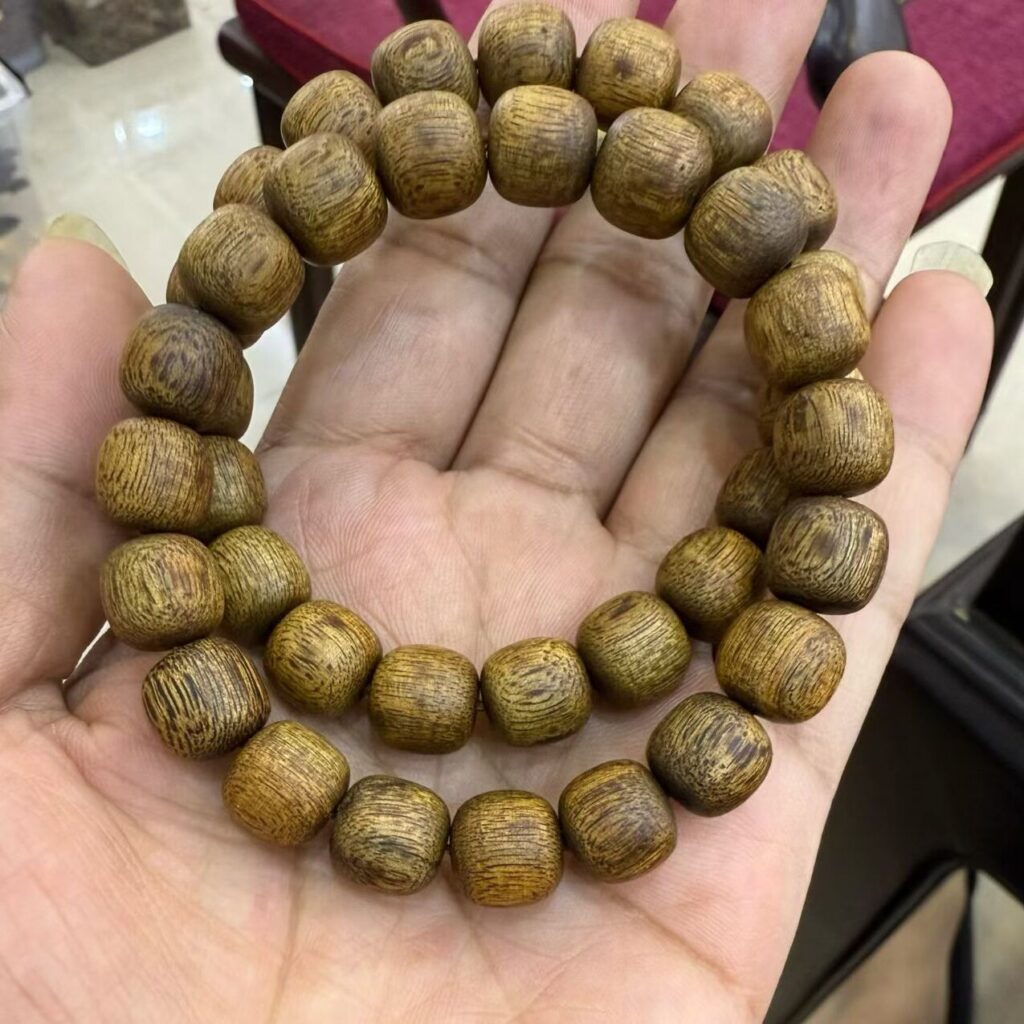
There are some tips for purchasing agarwood. For example, when resin forms in the trunk, brown-black fine lines appear—these are where the "chemical war" spreads along the plant vessels that transport nutrients through the trunk. If you see "horizontal lines," be careful. Before smelling the fragrance, rub it vigorously with your hands or slightly heat it with a lighter to bring the agarwood to its volatilization temperature of 39.8°C.
Beginners should not be fooled by strong fragrances or by weight that sinks in water. Some counterfeiters boil agarwood wood with no resin formation black using medicinal dregs, then add chemical fragrance essences by pressing, squeezing, injecting, and steaming. This fake agarwood is called "medicinal agarwood." In antiques, being fooled is also called "taking medicine," and in agarwood the term is truly apt. In addition, counterfeiters use physical high-pressure methods to compress agarwood volume, increasing its specific gravity so it sinks in water. These methods have deceived many collectors.
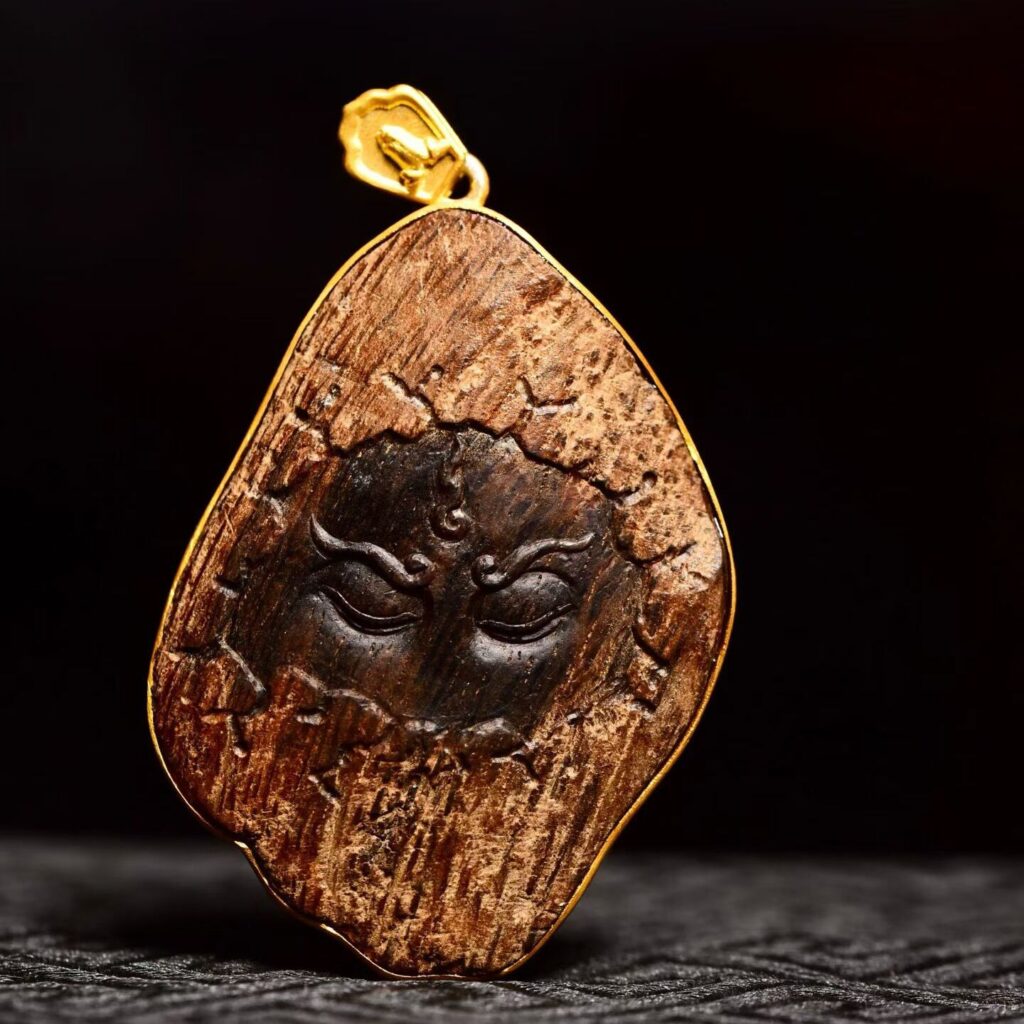
The ultimate method for identifying agarwood is to smell it. Although technology is advanced today, agarwood still cannot be synthesized artificially. Therefore, no matter how color and material are faked, the unique fragrance of agarwood cannot be "manufactured." The key to collecting agarwood lies in smelling more and firmly remembering the fragrances of different varieties. Collectors often speak of training one's eye, but for agarwood collecting, the most important thing is to train one's sense of smell—to train one's nose.
This article was compiled by "Chenxiang123"; original source: https://www.chenxiang123.com/chenxiang-zhenjun/
Compiled for general knowledge; traditional references are cultural notes, not medical advice.
Frequently Asked Questions
What is Agarwood?
Among the four great spices of ancient China—agarwood, sandalwood, ambergris, and musk—agarwood ranks first and remains the most mysterious, formed only when agarwood trees are infected by fungi.
How should I choose agarwood?
Buy from traceable, testable channels and match the form (incense, beads, raw wood) to your use. Avoid exaggerated claims such as "wild" or "sinking grade" without proof, and prefer products with lab reports and origin documentation.
How should agarwood be stored and maintained?
Agarwood dislikes moisture, odours and direct sunlight. Keep it sealed, dark and cool, store different origins separately, and air and inspect long-stored pieces periodically against mould and insects.
How can I tell real agarwood from fake?
Authentication combines sensory checks with technical ones: natural agarwood has a clean, long-lasting, cool-sweet scent and burns with pale, non-pungent smoke. GC-MS analysis of characteristic compounds (chromones, sesquiterpenes) adds objective confirmation. Buying through traceable channels with certificates lowers the risk.
How do agarwood origins differ?
Climate, tree species and resin-induction methods give each origin a distinct scent profile — for example Hainan tends to be clean and elegant, Vietnam sweet and cool, Indonesia deep and full. Origin is a key factor in grading and pricing.
What is the current agarwood market like?
Prices diverge sharply by resin density, origin and form, with both top-end collectibles and entry-level consumer products active. Use actual transactions from legal, testable channels as reference rather than a single quotation.
What is the relationship between agarwood and incense culture?
Agarwood is the core medium of East Asian incense culture, spanning temple offerings, literati gatherings and contemporary lifestyle aesthetics. Understanding this cultural background helps explain its value.
Does agarwood have health benefits?
Traditionally agarwood has been used for calming and sleep-related rituals, but evidence quality and dosage need careful reading. Keep traditional use and scientific evidence clearly separated and follow professional guidance.
参考资料
You may also like



评论区
评论匿名可浏览,登录后可发表;提交后先审后显。
评论加载中…