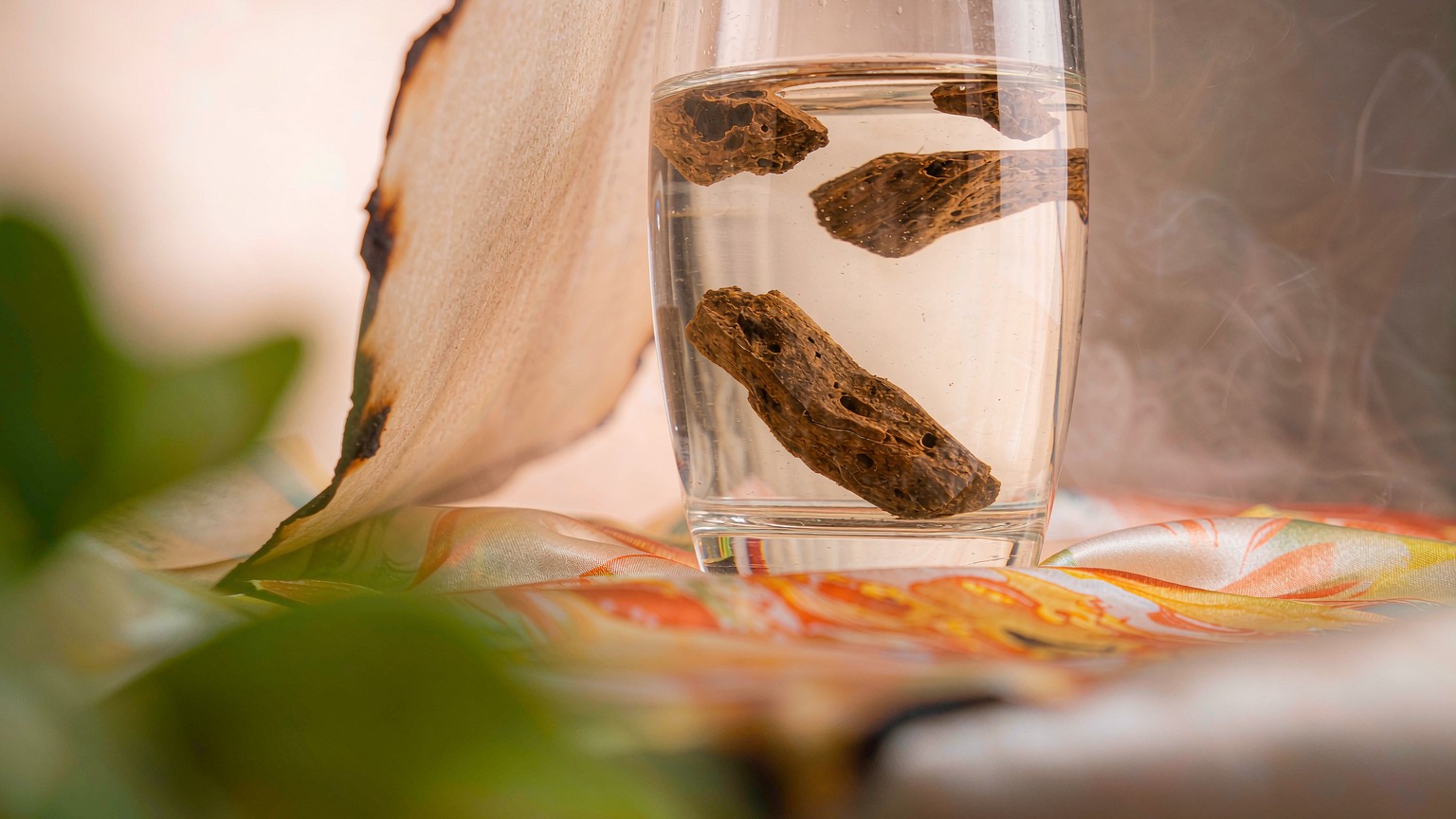
Medicinal Value of Agarwood
Many people know that agarwood is a commonly used medicinal material in traditional Chinese medicine, but they do not know which diseases it can treat, why its medicinal value is so high, or what its medicinal values are. Below, Chenxiang123 provides a detailed introduction.

In fact, agarwood, as a traditional Chinese medicine, was recorded as early as ancient times in China. According to many historical records, physicians of successive dynasties accumulated rich experience in using agarwood to treat diseases. For example, Li Shizhen recorded in the Compendium of Materia Medica: "Agarwood is pungent in nature, slightly warm, and non-toxic. It has the effects of lowering qi, consolidating and holding, regulating the middle, and clearing the liver; it is an aromatic stimulating medicine." The New Compilation of Materia Medica states: "Agarwood warms the kidney and also opens the heart. To use Coptis and cinnamon to harmonize the heart and kidney is not as convenient as using agarwood, which treats both with one medicine." However, to use it to harmonize the heart and kidney, it is best to use one qian, without water grinding; slice it into powder and mix it into heart-kidney tonics for oral administration. Another example is the Rihua Zi Materia Medica, which says: "It regulates the middle, tonifies the five viscera, boosts essence and strengthens yang, warms the waist and knees, removes pathogenic qi, and breaks accumulations and masses." The Yaokou Huayi says: "It is purely yang and ascending, heavy in body and sinking, pungent in taste and dispersing, vigorous and horizontal in movement, hence it has the power to penetrate heaven and earth... In short, it dredges the meridians and collaterals; blood rises with qi, and all pain and itching are invariably cured." There are also Bencao Fengyuan and Zhenzhu Nang, among others, all with unique discussions.

The pharmacological effects of agarwood are multifaceted.
(1) Domestic agarwood decoction has a complete inhibitory effect on human-type Mycobacterium tuberculosis; it also has strong antibacterial effects on Salmonella typhi and Shigella flexneri.
(2) The volatile oil components of agarwood have anesthetic, analgesic, and muscle-relaxing effects.
(3) Agarwood has sedative and anti-asthmatic effects.
(4) Agarwood has an inhibitory effect on the central nervous system.
(5) Agarwood has a blood pressure-lowering effect.
(6) Agarwood has anti-arrhythmic and anti-myocardial ischemia effects.
(7) Recent research has found that agarwood also has a significant anti-cancer effect.

According to modern clinical trial research, agarwood is a specific medicine for stomach pain.
It is also a good analgesic, with effects of tonifying the spleen and benefiting the kidney, strengthening yang and assisting yang, and lowering rebellious qi and relieving asthma. It is mainly used to treat qi rebellion with chest fullness, acute asthma and angina pectoris, accumulations and masses, stomach cold with vomiting, cholera, cold essence in men, and foul qi and malignant sores.
Agarwood has significant therapeutic effects in treating diseases of the digestive system, respiratory system, cardiovascular and cerebrovascular systems, nervous system, as well as surgical, gynecological, pediatric, ENT, and dermatological diseases. It also has good effects in anti-tumor, anti-rheumatic, and beauty care aspects.
Agarwood has a wide range of uses, and many Chinese patent medicines contain agarwood. In the Chinese Basic Patent Medicines, there are as many as forty-seven Chinese patent medicines that use agarwood. Examples include Shiyi Jiuji Dan, Da Huoluo Dan, Huitian Zaizao Wan, Chenxiang Huazhi Wan, Liqi Shuxin Wan, Xiao'er Qiying Wan, Shixiang Fansheng Dan, Qingxin Guntan Wan, Funing Wan, Fuke Tongjing Wan, Jiebai Wan, and many others. Folk proven prescriptions number in the hundreds. During the fight against SARS, the Chinese patent medicine "Xinxue Granules," which contains "agarwood," was recommended by famous veteran traditional Chinese medicine practitioners as an anti-SARS drug. The well-known Japanese medicine "Kyushin" also contains agarwood.
Recent research has found that frequently smelling incense products containing agarwood components can refresh the mind, boost immunity and ward off evil, calm the emotions, and discard distracting thoughts, among many other effects. It not only brings sensory enjoyment but also has health benefits for the body.
As the "chief of all fragrances" since ancient times, agarwood has a mysterious aroma that cannot be synthesized artificially. It can settle the soul and calm the spirit, and is the only fragrance that can penetrate the three realms. Agarwood possesses an extremely unique fragrance; its aroma can pass through the human body's seven chakras, eight meridians, and three hundred sixty-five orifices, settling the soul and calming the spirit. It is the best natural auxiliary sleep aid for insomniacs.
Agarwood is one of the rare medicinal materials in nature with antibacterial and immune-enhancing functions. Its odor is fragrant, and it enters the lung, kidney, spleen, and stomach meridians. It is the finest medicinal material among qi-moving medicines, capable of regulating the movement of qi within the human body and dredging visceral functions. It is a very effective medicinal material for the lungs, kidneys, liver, stomach, intestines, and heart.

Agarwood's therapeutic and functional applications include:
Lungs (pulmonary tuberculosis, asthma), kidneys (kidney tonification, diuresis, yang strengthening), liver (hepatitis, cirrhosis, hepatomegaly), stomach (gastric ulcer, gastritis, stomach pain), intestines (constipation).
It also has therapeutic effects on cancer and other chronic diseases.
It has special therapeutic effects on strengthening the heart and nerves. The well-known Japanese medicine "Kyushin" contains premium agarwood — qinan.
Court medical histories record that emperors and concubines of successive dynasties all had the habit of using agarwood incense for health preservation. Empress Dowager Cixi of the Qing Dynasty in particular would fully fumigate her bedchamber with agarwood every day before sleeping after smelling the fragrance.
From ancient times to the present, Arab royal families and nobles have retained the habit of directly burning agarwood and applying agarwood oil.
The Japanese royal family also has a habit of using incense, and Japan has elevated the burning of agarwood to the realm of kodo (the way of fragrance).
The reason agarwood has the effects of uplifting qi and nourishing the spirit, purifying the soul, and connecting the three realms through fragrance is that its mysterious aroma cannot be synthesized artificially. This aroma is formed by the essence of trees gathering the spiritual qi of heaven and earth over a thousand years.
The ancient Chinese medical text Puji Fang records that agarwood has beauty effects of invigorating blood and beautifying skin, eliminating dark spots, and removing oil. It is suitable for friends with oily skin who are prone to acne. Agarwood not only makes the skin moist and comfortable but can also remove stubborn spots. Even a very small amount of agarwood powder can make the scent of perfume and cosmetics last longer.
In addition, agarwood also has the effects of clearing heat and dispelling wind, cooling blood and dredging meridians, and nourishing the heart and calming the spirit. It has helpful and therapeutic effects on palpitations and shortness of breath caused by heart disease, heart palpitations and restlessness, neurasthenia, insomnia and dreaminess, fainting and loss of consciousness, and can clear heart heat and pulse heat. It is helpful for hypertension and diabetes. Soaking a coarse salt bag, drinking a bowl of sour jujube seed soup, and smelling agarwood incense have the effects of calming the spirit and relieving depression, which can make one's complexion white and tender, skin smooth, and wrinkles reduced. In addition to physical health, beauty, and slimness, one must maintain a happy inner mental state to radiate natural brilliance from the inside out.
Traditional Chinese medicine has deep research and accumulation regarding the effects of agarwood. The following are some records:
(1) Bielu: Treats wind-edema and toxic swelling, removes foul qi.
(2) Tao Hongjing: Treats malignant nodules and toxic swelling.
(3) Haiyao Bencao: Mainly treats heart and abdominal pain, cholera, and sudden severe illness; clears the spirit, and should be decocted with wine for administration; various sores and swellings should be used in ointments.
(4) Rihua Zi Bencao: Regulates the middle, tonifies the five viscera, boosts essence and strengthens yang, warms the waist and knees, and removes pathogenic qi. Stops cramps, vomiting and diarrhea, and cold qi; breaks accumulations and masses; (treats) cold wind numbness, joint weakness, damp-wind skin itching, heart and abdominal pain, and qi dysentery.
(5) Zhenzhu Nang: Tonifies the kidney, and also removes foul qi and regulates the middle.
(6) Gangmu: Treats upper heat and lower cold, qi rebellion and panting, deficiency constipation of the large intestine, qi strangury of urination, and cold essence in men.
(7) Bencao Beiyao: Can lower qi and precipitate phlegm and saliva; can both descend and ascend. Its qi is fragrant and enters the spleen, hence it can regulate all qi and harmonize the middle. Its color is black. Its body is yang, hence it enters the right arm's mingmen, warms essence and assists yang. It moves qi without damaging qi, and warms the middle without assisting fire.
(8) Yilin Zuanyao: Strengthens the kidney, tonifies mingmen, warms the middle, dries spleen dampness, drains the heart, and lowers rebellious qi. It can regulate all qi that is not harmonized. It also treats lockjaw with toxic dysentery and evil cold wind-dampness arthralgia.
(9) Bencao Zaixin: Treats liver depression, lowers liver qi, harmonizes the spleen and stomach, eliminates damp qi, promotes urination, and opens the orifices.
Fire, treats abdominal empty cramping pain, lockjaw with toxic dysentery, stagnation, pathogenic qi, fear of cold, numbness, and dysentery. Black-colored sinking grade is the best quality; sweet and fragrant in nature is normal, pungent nature is hot. Agarwood can lower qi and treat stroke, phlegm panting, lockjaw, and other conditions. When ground in water it becomes clear; when burned and the smoke is introduced into the nostrils, the patient revives, and it can also drive away pathogenic and foul qi.
(10) Zhongyao Zhi: Belongs to yang and its nature is sinking; it has many effects on the lower body and strengthens original yang. It enters the kidney and mingmen meridians, removes dampness and eliminates miasma, suppresses ghostly and evil qi, treats wind-edema and toxic swelling, resolves formless stagnation, and opens the spiritual platform and invigorates qi.
(11) Daming Bencao: Regulates the middle and tonifies the five viscera, boosts essence and strengthens yang, warms the waist and knees, stops cramps, vomiting, diarrhea, and cold qi, breaks accumulations and masses, cold wind numbness, joint weakness and wind-dampness, skin itching, and qi dysentery.
(12) Mingyi Bielu: Mainly treats wind-edema and toxic swelling, removes foul qi.
In addition, the Plant Names and Reality Illustration Long Compilation introduces that the fragrance of agarwood has an indescribable subtlety. Among them is one anciently called the "passion-assisting incense": An Lushan presented it, and Emperor Xuanzong held it in his mouth, and his strength was tireless.
The main efficacy of agarwood is to "dispel foul qi and regulate the movement of qi within the body," which is precisely the root of treating diseases. Healthy people taking it can prevent the accumulation of foul qi in the body and maintain the normal operation of the body's regulatory functions.
Agarwood has therapeutic effects on strengthening the heart and nerves. The well-known medicine "Kyushin" contains agarwood. Agarwood can help sleep, nourish beauty, relieve bloating, eliminate accumulated stool, remove oil, and has a good yang-uplifting effect. The Traditional Chinese Medicine Committee of the Taiwan Department of Health provided a report on the medicinal properties of agarwood, stating that agarwood mainly treats: vomiting and hiccups, heart and abdominal pain, large intestine qi stagnation, waist and knee deficiency cold, chest and diaphragm fullness and blockage, and panting.
The medicinal nature of agarwood is warm and completely non-toxic. It can well regulate our endocrine system. Its fragrance can open the orifices, stimulate the cerebral cortex, activate brain cells, and enable the internal organs to function benignly. It can strengthen the heart, kidney, and liver functions, making one energetic, clear-headed, and cheerful.
Agarwood has a fragrant odor, mainly pungent, dispersing, and dredging. It enters the kidney, spleen, and stomach meridians and is the finest medicinal material among qi-moving medicines.
Drinking agarwood can also boost essence and strengthen yang, because agarwood can lock the essence gate, secure the essence pass, and nourish kidney water. Its pungent taste can both guard and penetrate; its warm nature can warm the waist and knees and strengthen original yang. Therefore, it can produce essence water and strengthen the yang path, making the essence qi full and curing waist and knee soreness and pain.
Agarwood is one of the few raw medicinal materials in nature with strong antibacterial efficacy. Unlike most Chinese medicinal materials, agarwood is an extremely effective therapeutic medicine, and its treatment of symptoms is obvious and immediate.
This article was compiled by "Chenxiang123". Original source: https://www.chenxiang123.com/chenxiang-yaoyong-jiazhi/
Compiled for general knowledge; traditional references are cultural notes, not medical advice.
Frequently Asked Questions
What is Medicinal Value of Agarwood?
Agarwood is a common medicinal material in traditional Chinese medicine, yet many people do not know which diseases it can treat or why its medicinal value is so high. This article details the medicinal value of agarwood.
How should I choose agarwood?
Buy from traceable, testable channels and match the form (incense, beads, raw wood) to your use. Avoid exaggerated claims such as "wild" or "sinking grade" without proof, and prefer products with lab reports and origin documentation.
How should agarwood be stored and maintained?
Agarwood dislikes moisture, odours and direct sunlight. Keep it sealed, dark and cool, store different origins separately, and air and inspect long-stored pieces periodically against mould and insects.
How can I tell real agarwood from fake?
Authentication combines sensory checks with technical ones: natural agarwood has a clean, long-lasting, cool-sweet scent and burns with pale, non-pungent smoke. GC-MS analysis of characteristic compounds (chromones, sesquiterpenes) adds objective confirmation. Buying through traceable channels with certificates lowers the risk.
How do agarwood origins differ?
Climate, tree species and resin-induction methods give each origin a distinct scent profile — for example Hainan tends to be clean and elegant, Vietnam sweet and cool, Indonesia deep and full. Origin is a key factor in grading and pricing.
What is the current agarwood market like?
Prices diverge sharply by resin density, origin and form, with both top-end collectibles and entry-level consumer products active. Use actual transactions from legal, testable channels as reference rather than a single quotation.
What is the relationship between agarwood and incense culture?
Agarwood is the core medium of East Asian incense culture, spanning temple offerings, literati gatherings and contemporary lifestyle aesthetics. Understanding this cultural background helps explain its value.
Does agarwood have health benefits?
Traditionally agarwood has been used for calming and sleep-related rituals, but evidence quality and dosage need careful reading. Keep traditional use and scientific evidence clearly separated and follow professional guidance.
参考资料
You may also like
评论区
评论匿名可浏览,登录后可发表;提交后先审后显。
评论加载中…