Agarwood Knowledge: How Many Aroma Profiles Does Agarwood Have?
When it comes to agarwood, the first thing people think of is the aroma of agarwood. There are countless words used to describe the aroma of agarwood: magical, changeable, pleasant, endless… far too many to count. Aroma is a confirmation of agarwood's identity, and many fragrance enthusiasts love it so much precisely because of the scent that agarwood releases.
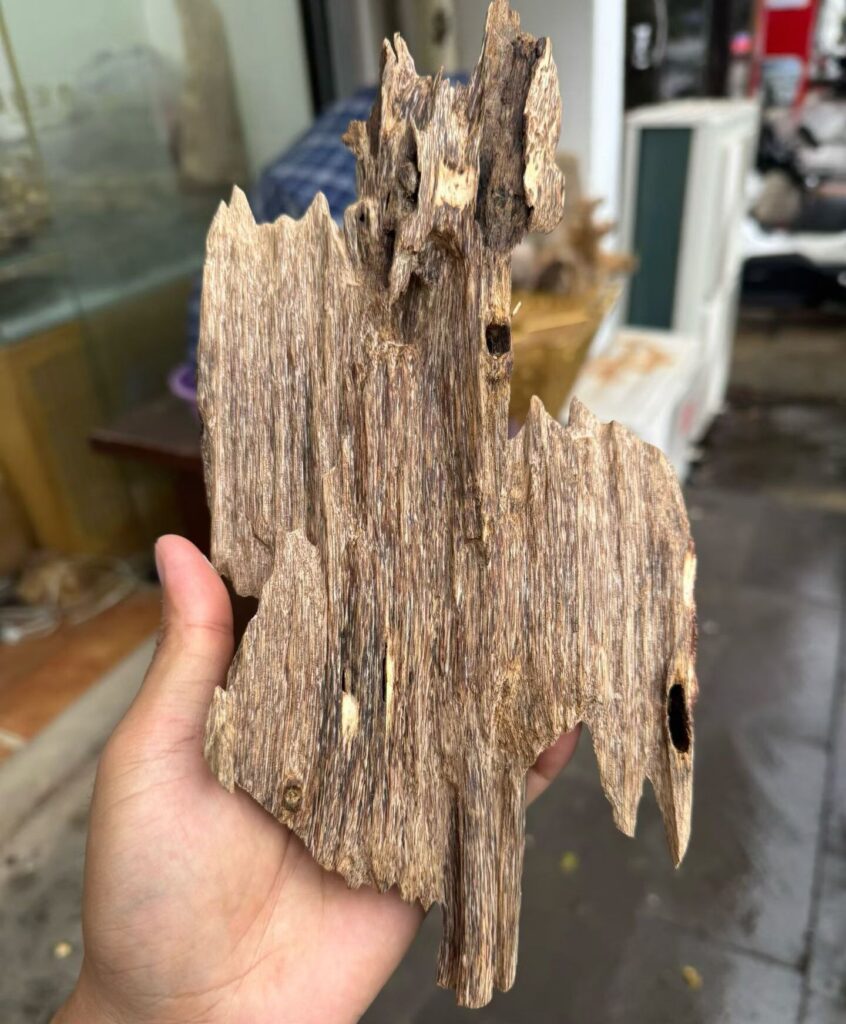
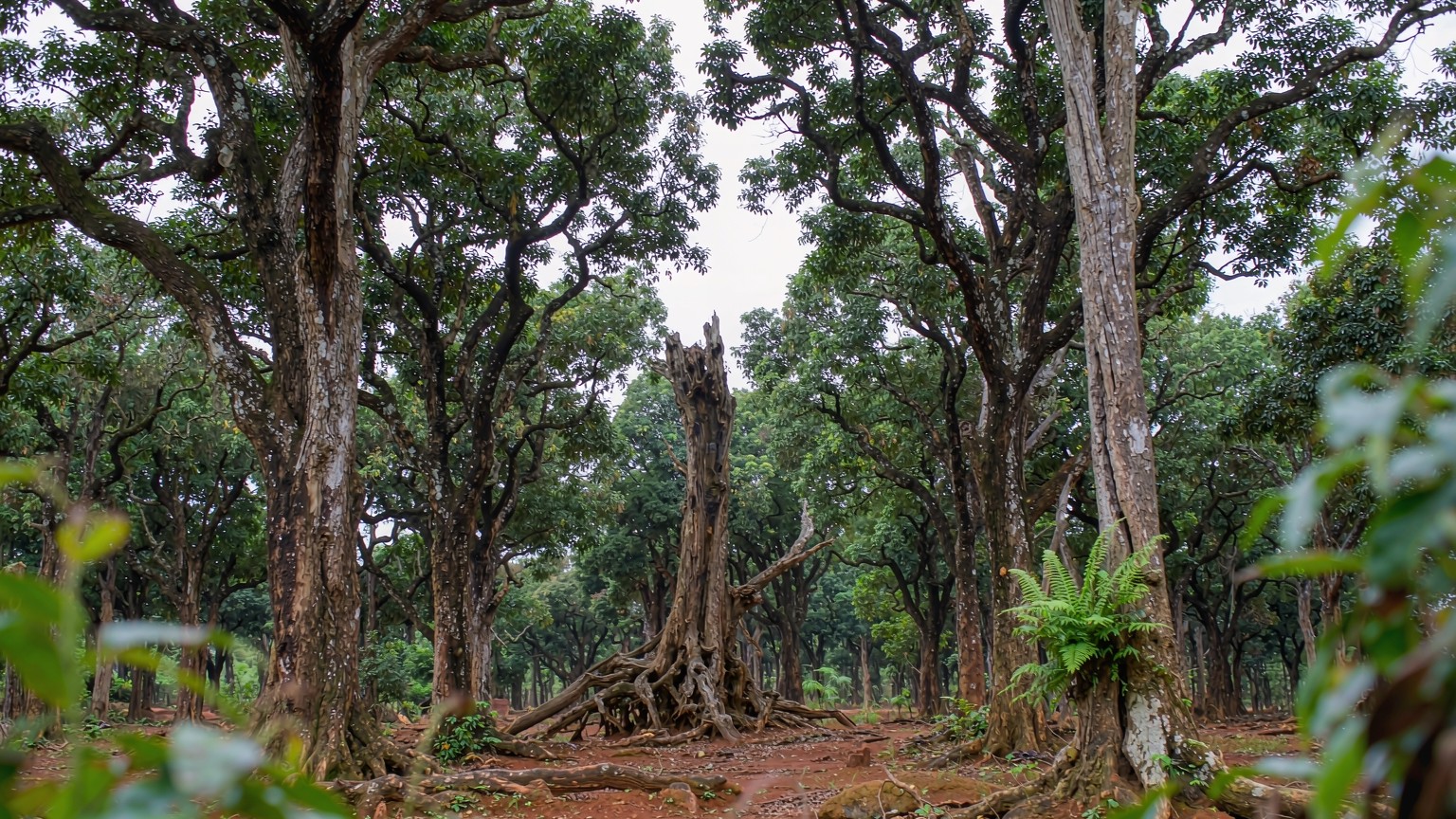
Why does agarwood have an aroma? And why is it endless and inexhaustible? It is mainly due to the resin contained in agarwood. Resin is the source of the fragrance; as long as it is not damaged and is properly maintained, the fragrance will still be there after thousands of years—apart from gaining a little more of the charm of time, everything else remains as before. Agarwood resin is slowly secreted by the resin-forming tree as self-protection after being damaged by external forces. The resin contains fragrant substances, so the process of resin volatilization is the process of agarwood's aroma being released. The rate of resin volatilization is extremely slow, so the aroma can be said to be endless.
There are many types of agarwood aroma, and agarwood from each origin has its own characteristics—this is why origin can be judged by aroma, and why many enthusiasts choose the agarwood aroma they prefer based on origin. The more common agarwood aromas that fragrance enthusiasts favor highly include: fresh, honey, medicinal, fruity, floral, sweet, and intense, among others. These cover some of the aromas of the two major categories, Hui'an and Sin Chew. The intensity of agarwood is greatly affected by temperature: at low temperatures, the aroma released is relatively faint; if agarwood is heated or burned at high temperature, the aroma becomes especially intense and is released to the fullest.
[Fresh type]
The fresh, elegant aroma is the most popular in agarwood, and Hainan agarwood is undoubtedly its representative. The most classic description of the aroma of Hainan agarwood may be that of the Song dynasty poet Fan Chengda in Gui Hai Yu Heng Zhi · Zhi Xiang: "Generally, the aroma of Hainan is all clear and pure, like lotus, plum blossom, goose down, honeycomb and the like; burn a little on a Boshan censer, and the fragrance fills the room and spreads everywhere, and even when burned on coal it does not scorch." Later generations' high regard for Vietnamese agarwood also stems from the fact that among its superior agarwood there are qualities that are beautiful, smooth, fresh, graceful, and lasting, quite reminiscent of Hainan agarwood.
[Honey type]
Bencao Gangmu states: honey fragrance grows in Jiaozhou. The tree is large, and its nodes are like agarwood. Jiaozhou Ji also records that honey fragrance is no different from agarwood. Judging from today's understanding of agarwood, what the ancients called honey fragrance is in fact agarwood that has a sweetness within its fresh aroma, resembling the scent of honey. Nanyue Zhi also confirms this: "The people of Jiao (Jiaozhi) call agarwood honey fragrance." This shows how classic the honey aroma is as an agarwood fragrance; the most representative of this aroma is Vietnamese Nha Trang agarwood.
[Medicinal type]
In mainland China, many people first came to know agarwood through "medicinal agarwood," so for a time "agarwood beads" steamed and pressed with Chinese herbs were all the rage. The "medicinal aroma" in genuine agarwood is tranquil and elegant, with a faint, elusive bitterness—merely a scent reminiscent of Chinese medicinal herbs, not the strong flavor of a bitter decoction. Nevertheless, the medicinal aroma is one of the most familiar agarwood aromas, and Vietnamese Hui'an agarwood is the representative of this type.
[Fruity type]
Although fruity aroma is not common in agarwood, it is very classic, because qinan often has a fruity aroma, so it is indispensable among classic aromas. Fruity aroma is a fresh aroma with the scent of fruit, and the notes rise; because the aroma is sometimes accompanied by a slight sweet-and-sour taste that stimulates both smell and taste, the aura of fruity agarwood appears relatively lively, and smelling it is very refreshing and pleasant. Among fruity aromas, the scent of Vietnamese white qinan is the most prominent.
[Floral type]
Floral aroma is a common fragrance in agarwood. Unlike the elegant, refined freshness of fresh aroma, floral aroma gives a warm and intimate feeling. Floral aroma can be smelled in many Indonesian agarwoods, and also in agarwood from the Vietnamese region—except that the floral aroma of Vietnamese agarwood is blended with honey, making the scent rich, while the floral aroma of Indonesian agarwood is relatively pure and comparatively uniform. The most representative agarwood for floral aroma is produced in Kalimantan.
[Sweet type]
Sweet aroma is the hardest to describe; it is specifically the aroma characteristic used when evaluating red soil or yellow soil agarwood. Red soil and yellow soil agarwood have been buried deep in soil or swamps for hundreds of years, and the original agarwood scent has matured to the utmost, releasing an extremely sweet and mellow unique charm when smelled. The most representative of sweet aroma is Vietnam's Phuoc Son red soil agarwood.
[Intense type]
"Intense" is the greatest characteristic of this aroma. The aroma of "intense" agarwood cannot be described with concrete things, but that enjoyable feeling comes from humans' instinctive love of fragrance. Intense agarwood aroma is usually relatively mellow, like aged fine wine, making people immerse themselves in it. Sin Chew agarwood produced in Indonesia and Malaysia is mostly of the intense type, and the most representative is the double-pointed agarwood produced on Timor Island and Kisar Island.
The saying "a thousand fragrance lovers have a thousand agarwood aromas" has quietly become popular. This does not mean that agarwood really has a thousand aromas; rather, it depends on how and to what extent fragrance lovers perceive agarwood aroma. Some enthusiasts' sense of smell is more sensitive to certain agarwood aromas and can detect them no matter how faint, while some enthusiasts' sense of smell automatically ignores certain aromas—it is only natural that others can smell what they cannot. In fact, the meaning of "a thousand enthusiasts have a thousand agarwood aromas" leans more toward the insights gained when smelling the aroma, and is full of individuality and emotion. Different environments, different life experiences, different emotions when smelling agarwood, and various other reasons create differences in the final experience. Yet these "a thousand agarwood aromas" prove from another angle the charm of appreciating agarwood.
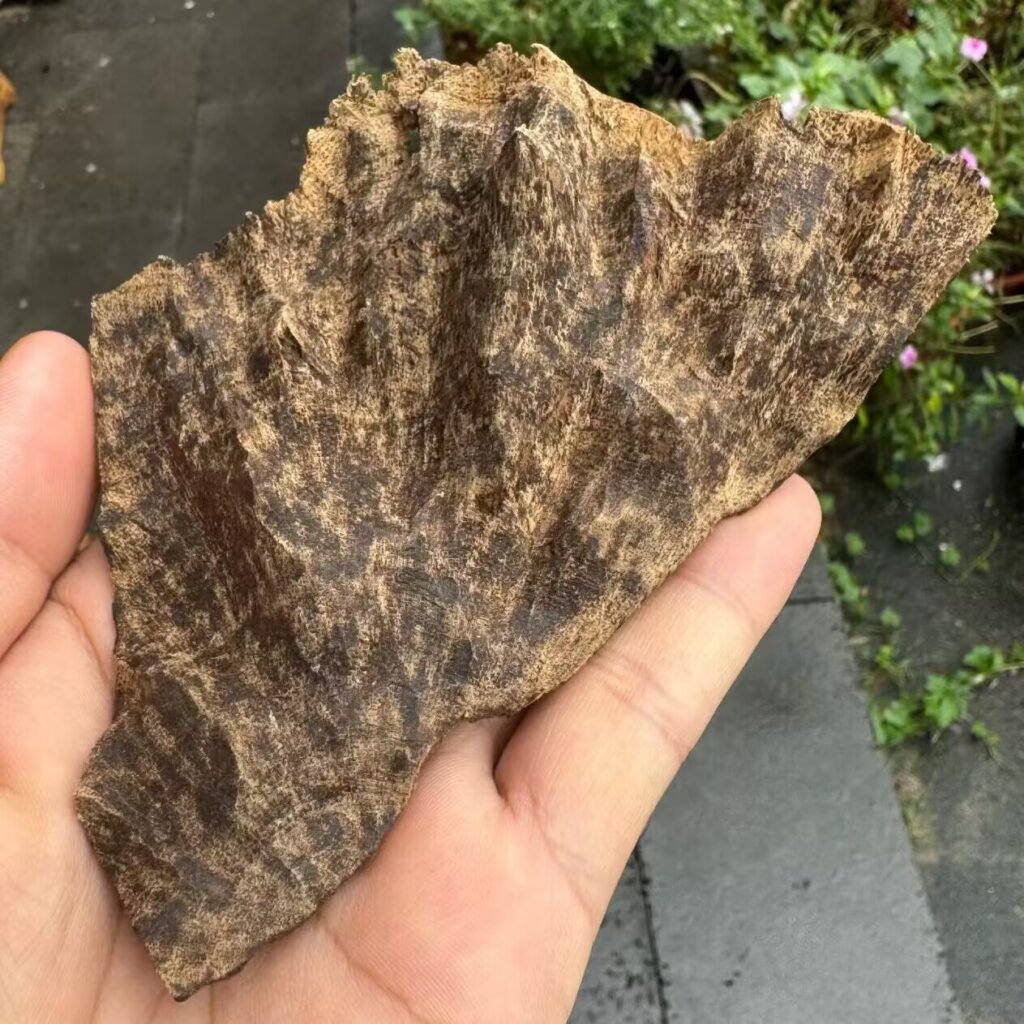
Aroma should be the soul of agarwood—even its name contains the word "fragrance," showing the importance of aroma. How many people have become interested in agarwood because of its aroma, and how many have become infatuated with it because of its aroma. The aroma of natural wild agarwood is nature's selfless gift over thousands of years; even with today's advanced technology, the natural feel of agarwood aroma cannot be replicated exactly. Agarwood aroma is also an important basis for identifying authenticity, because, as mentioned earlier, today's technology cannot imitate the natural wild scent—so even if the appearance is similar, authenticity can be seen through the aroma.
The aroma of agarwood is a characteristic of agarwood and an important part of its value. Through aroma, we can explore the mysteries of agarwood at a deeper level. If fine food is a feast for taste, then the aroma of agarwood is a feast for the sense of smell—relaxing the mind and reflecting on the future in the process of appreciation.
This article was compiled by "Chenxiang123" and the original source is: https://www.chenxiang123.com/chenxiang-xiangwei-zhonglei/
Compiled for general knowledge; traditional references are cultural notes, not medical advice.
Frequently Asked Questions
What is Agarwood Knowledge?
When people think of agarwood, its aroma is the first thing that comes to mind, described with countless words: magical, changeable, pleasant, endless. Aroma is a mark of agarwood's identity, and many fragrance lovers are drawn to it precisely because of the scent it releases.
How should I choose agarwood?
Buy from traceable, testable channels and match the form (incense, beads, raw wood) to your use. Avoid exaggerated claims such as "wild" or "sinking grade" without proof, and prefer products with lab reports and origin documentation.
How should agarwood be stored and maintained?
Agarwood dislikes moisture, odours and direct sunlight. Keep it sealed, dark and cool, store different origins separately, and air and inspect long-stored pieces periodically against mould and insects.
How can I tell real agarwood from fake?
Authentication combines sensory checks with technical ones: natural agarwood has a clean, long-lasting, cool-sweet scent and burns with pale, non-pungent smoke. GC-MS analysis of characteristic compounds (chromones, sesquiterpenes) adds objective confirmation. Buying through traceable channels with certificates lowers the risk.
How do agarwood origins differ?
Climate, tree species and resin-induction methods give each origin a distinct scent profile — for example Hainan tends to be clean and elegant, Vietnam sweet and cool, Indonesia deep and full. Origin is a key factor in grading and pricing.
What is the current agarwood market like?
Prices diverge sharply by resin density, origin and form, with both top-end collectibles and entry-level consumer products active. Use actual transactions from legal, testable channels as reference rather than a single quotation.
What is the relationship between agarwood and incense culture?
Agarwood is the core medium of East Asian incense culture, spanning temple offerings, literati gatherings and contemporary lifestyle aesthetics. Understanding this cultural background helps explain its value.
Does agarwood have health benefits?
Traditionally agarwood has been used for calming and sleep-related rituals, but evidence quality and dosage need careful reading. Keep traditional use and scientific evidence clearly separated and follow professional guidance.
参考资料
You may also like



评论区
评论匿名可浏览,登录后可发表;提交后先审后显。
评论加载中…