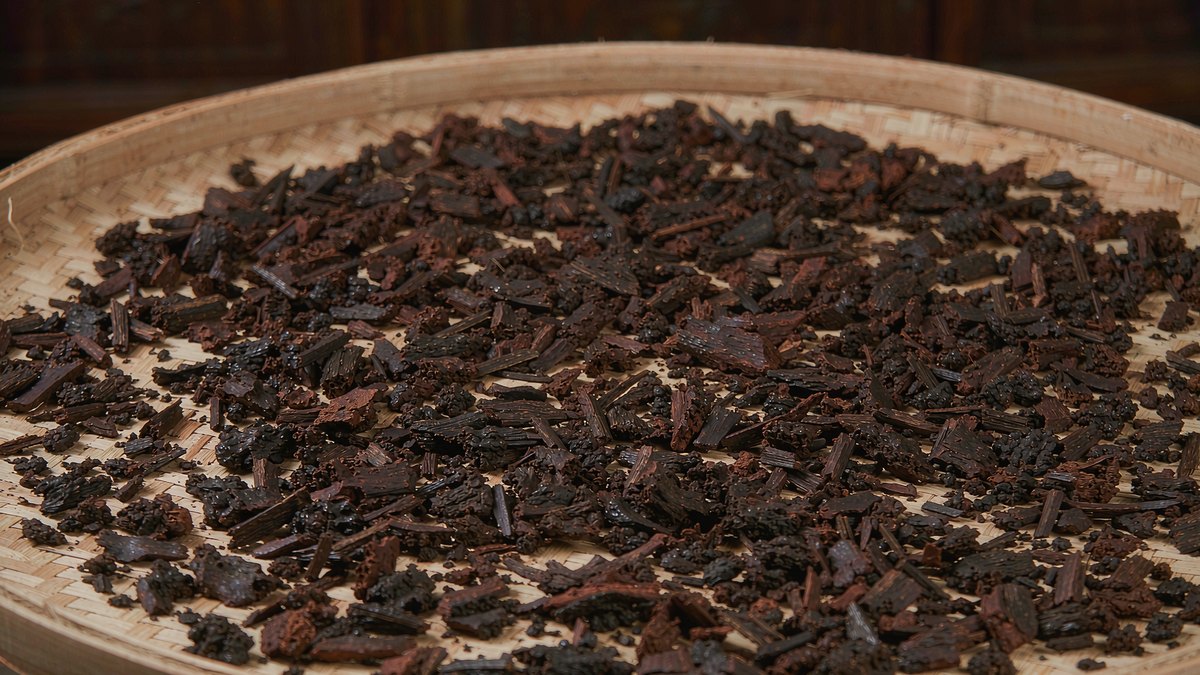
The Relationship Between Agarwood and the Five Major Religions
The relationship between agarwood and the five major religions runs through the entire history of religion. Agarwood is a precious medicine and health-preserving treasure in traditional Chinese medicine, and in the process of incense burning it also has the effect of purifying the mind. People in ancient times believed that the curling incense smoke reached the heavenly court, prompting communication between the human heart and the deities, and also had the effect of warding off evil and accomplishing the merit of offerings. Therefore, the "Incense Praise" (Luxiang Zan) that began to circulate in Chan Buddhist daily liturgy in the Ming dynasty explicitly praises: "The incense in the censer is just lit, perfuming the dharma realm; all the Buddhas in their ocean-like assemblies hear it from afar, and auspicious clouds gather everywhere." In the celebrations and sacrificial rites of the world's five major religions, the burning of agarwood is regarded as the highest form of reverence for the divine, and is an indispensable sacred item for personal cultivation. Agarwood therefore plays a pivotal role in religion.

The preciousness of agarwood lies not only in its rarity and external value, but more importantly in its cultural heritage and the faith and spirit bestowed upon it. Having undergone decay and rebirth over thousands of years, agarwood is a spiritual substance of heaven and earth, a wondrous tree among humanity, a relic within wood; it possesses a serene and solemn power. The value of agarwood lies not only in its wondrous fragrance and unique medicinal properties, nor solely in its relationship with emperors and nobles, but also in its deep ties with religion.
Religion influences the course of humanity and world history through different cultural beliefs. Although the doctrines of each religion differ, they share a common token in their precepts: agarwood. Agarwood in religion encompasses Buddhism, Taoism, Christianity, Islam, and Catholicism; it is a rare treasure recognized by the world's five major religions and has long been regarded by them as the spiritual tree of the "Three Realms."
Below is a detailed introduction to the relationship between agarwood and the world's five major religions.
Agarwood's aroma is elegant and ethereal yet plain and unadorned, profound and mysterious yet approachable; offering agarwood to the Buddha further aids spiritual elevation.
The relationship between Buddhism and agarwood — agarwood is one of the important incense offerings to the Buddha and is revered as the king of incenses. It is also an important sacred item in Buddhist ceremonies. Agarwood is one of the main spices used in the "Buddha bathing" ceremony; prayer beads and Buddha statues carved from agarwood are extremely precious Buddhist implements, and incense made from agarwood is not only used for worshipping the Buddha but is also a superior incense for meditation and seated practice. Records of agarwood in Buddhist scriptures are found everywhere, especially in well-known sutras such as the Mahavairocana Sutra, Agama Sutra, Avatamsaka Sutra, Surangama Sutra, and the Platform Sutra of the Sixth Patriarch, where the records are too numerous to count.

1. Agarwood is a sacred item for revering the Buddha and honoring the divine;
2. Agarwood can regulate qi and open the orifices, and its mysterious aroma cannot be synthesized artificially;
3. Agarwood can suppress evil and transform negative energy, attracting good fortune and averting misfortune; its qi is favored by benevolent deities while malevolent spirits keep their distance;
4. At the same time, agarwood can stabilize the soul and calm the spirit; it is the only fragrance that can penetrate the Three Realms;
5. As a sacred item of the five religions, agarwood can remove all kinds of impurities. Agarwood is a rare treasure recognized by the world's five major religions.
Agarwood's aroma is elegant yet plain and unadorned, profound and mysterious yet approachable. Incense holds a lofty position in Buddhism and is a common adornment in the Pure Land. Therefore, in Buddhism it is regarded as a lofty sacred item for worshipping the Buddha, and is also used to symbolize noble virtue, the realm of cultivation, and the adornment of Buddha-cause. There are numerous records of agarwood in Buddhist scriptures, such as the Agama Sutra, Avatamsaka Sutra, Surangama Sutra, the Platform Sutra of the Sixth Patriarch, and many tantric classics, too numerous to count.

Incense holds a lofty position in Buddhism and is a common adornment in the Pure Land. Fragrant scents bring beautiful feelings and delight people, while virtuous practitioners also emit a sweet fragrance from their minds that inspires reverence. Even during Shakyamuni's lifetime, incense was highly esteemed. Chan spirit and incense smoke have accompanied each other for two thousand years; temples are always filled with curling incense smoke, and lay practitioners' homes invariably set up incense burners.
Agarwood is the most common offering item. Besides expressing sincerity and reverence in offerings to Buddhas and bodhisattvas, it also has the effects of removing impurities and spreading fragrance, repelling insects and warding off evil, and focusing the mind and refreshing the spirit. Its fragrance is especially clear, soft, and mellow, conducive to concentrating and stabilizing the mind, and can also help circulate qi and enter meditative absorption; it is most suitable for those who practice seated meditation and Chan. For ordinary practitioners, it is also highly beneficial for physical and mental cultivation.
Volume 19 of the Buddhist Lotus Sutra (Chapter on the Merits of the Dharma Teacher) describes in detail that agarwood is one of the important offerings in Buddhism. Agarwood is renowned for its beautiful fragrance and its ability to eliminate all kinds of impurities.
Agarwood is one of the main spices used in the "Buddha bathing" ceremony. Agarwood powder and agarwood chips are generally used for meditation, seated practice, or for burning during sutra-chanting assemblies to scent the altar and purify the space; higher-grade agarwood is used for drinking incense or made into prayer beads worn on the body or wrist. When chanting sutras, the beads are moved, and the agarwood, heated by body temperature, releases fragrance to stabilize the spirit and calm the soul. Fragrant scents bring beautiful feelings and delight people, while virtuous practitioners also emit a beautiful fragrance from their minds that inspires reverence and is known far and wide.

Within Buddhism's solemn and beautiful connotations, agarwood has a special mission for its era, exerting a profound influence on modern people's pursuit of living environment and spiritual realm. The floating world is water; ordinary wood drifts with the waves of desire, without stability. Agarwood is a stabilizing stone, equally calm and equally fragrant in the water. If a person has agarwood within their heart, they can face the floating world without fear. Therefore, from any perspective, the relationship between agarwood and Buddhism is always inseparable; agarwood has long become one of the characteristics of Buddhism.
In modern times, China has entered a golden age of collecting, and the collection and investment in agarwood continue to heat up. Meanwhile, Buddhist culture has continued to develop to this day, and the number of sincere seekers of the Buddha is growing. This has driven the value of Buddhist supplies in the agarwood market. Hand beads, handled pieces, and display pieces made from agarwood have a broad audience.
The relationship between Christianity/Catholicism and agarwood — John 19:39 of the Bible mentions: "And there came also Nicodemus, which at the first came to Jesus by night, and brought a mixture of myrrh and agarwood, about an hundred pound weight." Agarwood is one of the three treasures (agarwood, myrrh, and frankincense) brought into the world by the three Magi before the birth of Christ.

The relationship between Taoism and agarwood — Since ancient times, agarwood has been regarded by Taoism as a sacred item capable of penetrating the Three Realms of heaven, earth, and humanity, and is widely used in Taoist ritual activities. Taoism holds that agarwood, sandalwood, and jiangzhenxiang are incenses that can penetrate the Three Realms, with agarwood being the foremost. In rituals for subduing demons and driving away evil, agarwood is burned in bronze vessels and lit all day, symbolizing the harmonious and abundant qi between heaven and earth, called "dense curling smoke"; it is an essential treasure for cultivating and awakening to the sacred path.

The relationship between Islam and agarwood — It is often used in incense-burning ceremonies at important celebrations, and agarwood oil is used to wipe the bodies of the deceased.

In the Buddhist world, agarwood powder and chips are generally used for meditation and sutra chanting, for scenting the altar and sprinkling purification during ceremonies, and for burning during large dharma assemblies. Higher-grade agarwood is used for drinking incense or made into prayer beads worn on the body or wrist; when chanting sutras and mantras, the beads are moved, and the fragrance released by the agarwood beads, heated by body temperature and empowered by the sutras and mantras, is sufficient to regulate qi and harmonize the center, stabilizing the spirit and calming the soul.
Interestingly, the same agarwood, nurtured by different regions, ethnic groups, cultures, and customs, has formed completely different "incense ways." In the Middle East, strongly scented spices such as agarwood, cardamom, and cinnamon carry a strong sense of desire; after spreading to East Asian countries, they evolved into an elegant and tranquil style of playing the qin and sitting in meditation.

Within its solemn and beautiful connotations, agarwood has a special mission for its era, exerting a profound influence on modern people's pursuit of living environment and spiritual realm.
This article was compiled by "Chenxiang Web". Original source: https://www.chenxiang123.com/chenxiang-wudazonogjiao/
Compiled for general knowledge; traditional references are cultural notes, not medical advice.
Frequently Asked Questions
What is The Relationship Between Agarwood and the Five Major Religions?
The relationship between agarwood and the five major religions runs through the entire history of religion. Agarwood is a precious medicine and health-preserving treasure in traditional Chinese medicine, and in the process of incense burning it also purifies the mind.
How should I choose agarwood?
Buy from traceable, testable channels and match the form (incense, beads, raw wood) to your use. Avoid exaggerated claims such as "wild" or "sinking grade" without proof, and prefer products with lab reports and origin documentation.
How should agarwood be stored and maintained?
Agarwood dislikes moisture, odours and direct sunlight. Keep it sealed, dark and cool, store different origins separately, and air and inspect long-stored pieces periodically against mould and insects.
How can I tell real agarwood from fake?
Authentication combines sensory checks with technical ones: natural agarwood has a clean, long-lasting, cool-sweet scent and burns with pale, non-pungent smoke. GC-MS analysis of characteristic compounds (chromones, sesquiterpenes) adds objective confirmation. Buying through traceable channels with certificates lowers the risk.
How do agarwood origins differ?
Climate, tree species and resin-induction methods give each origin a distinct scent profile — for example Hainan tends to be clean and elegant, Vietnam sweet and cool, Indonesia deep and full. Origin is a key factor in grading and pricing.
What is the current agarwood market like?
Prices diverge sharply by resin density, origin and form, with both top-end collectibles and entry-level consumer products active. Use actual transactions from legal, testable channels as reference rather than a single quotation.
What is the relationship between agarwood and incense culture?
Agarwood is the core medium of East Asian incense culture, spanning temple offerings, literati gatherings and contemporary lifestyle aesthetics. Understanding this cultural background helps explain its value.
Does agarwood have health benefits?
Traditionally agarwood has been used for calming and sleep-related rituals, but evidence quality and dosage need careful reading. Keep traditional use and scientific evidence clearly separated and follow professional guidance.
参考资料
You may also like

评论区
评论匿名可浏览,登录后可发表;提交后先审后显。
评论加载中…