
The Long-Term Survival Path of the Agarwood Industry
Across the history of human industrial development, nearly every resource-based industry meets the same fate: when a wealth boom arrives, the cleverness that chases short-term gain floods in first, while the far-sighted vision that spans generations is left to a minority to uphold.
Agarwood, a national fragrance passed down for a thousand years, now stands at a crossroads of the era. It is a signature industry prioritized in Hainan's strategic layout, carrying the imaginative space of a hundred-billion market, yet it is also mired in the real predicament of impetuous overdrawing and eroding trust. If the entire industry fixates only on a single season's returns, continuously overdrawing germplasm resources, consumer trust, and the millennium-old agarwood culture, today's brief industrial prosperity will ultimately become a ruined legacy for future generations.
True agarwood practitioners must see the current reality clearly, distinguish between fleeting excitement and enduring foundations, and find the industry's real path to breakthrough.
I. The Real Current State and Deep Predicament of the Agarwood Industry
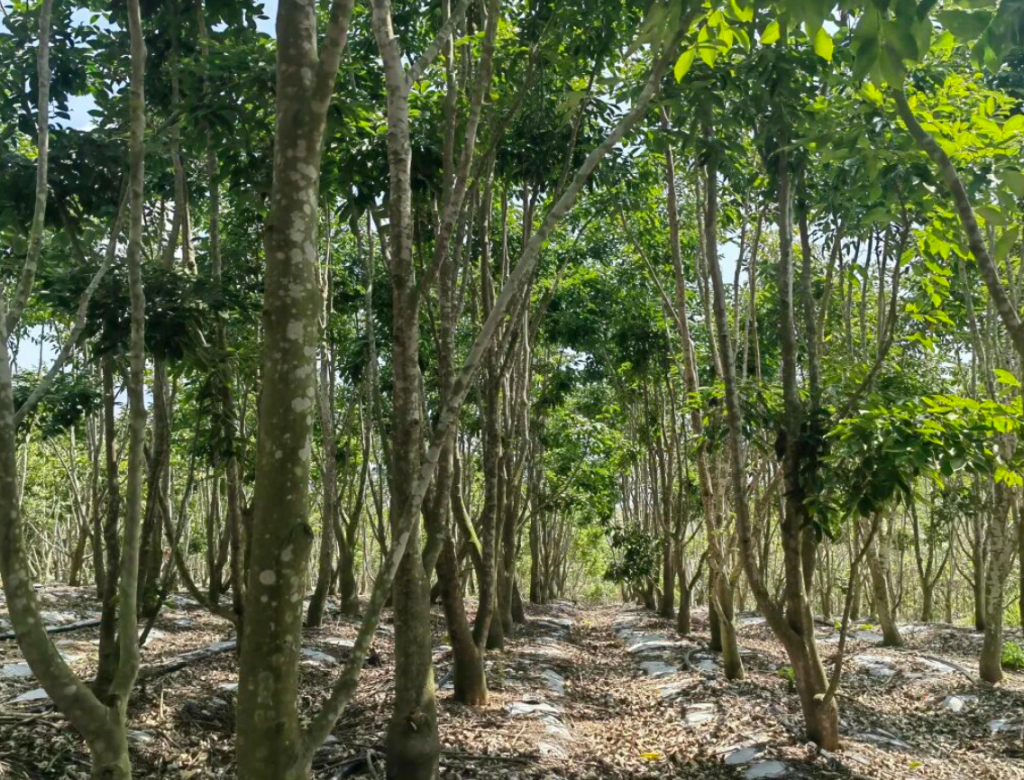
Domestic agarwood cultivation continues to expand; in Hainan alone, planted area has reached over 100,000 mu, with hundreds of related enterprises. Seedling breeding, base cultivation, craft processing, and livestream sales are all in full swing, with capital pouring in and enthusiasm running high. Beneath the prosperous surface, structural crises across the entire industrial chain have long been taking shape.
1. Cultivation end: chasing quick-win dividends, continuous overdrawing of germplasm resources
Cultivation is the foundation of the industry, and also the segment where short-sightedness is most severe. The market has long hyped get-rich-quick myths and touted short-term high yields, and the vast majority of growers take "fast resin formation, fast monetization" as their sole goal. Just a few years after planting, saplings are forcibly induced to form resin through drilling, gouging, physical wounding, chemical stimulation, and other methods, violating the natural growth laws of the trees and ignoring the time cycle required for oil maturation.
Quick-produced raw materials yield high output and ship fast, but their aroma profile is impetuous and thin, lacking layers and weak in medicinal properties, entirely devoid of the steady depth of aged material. A flood of homogenized commodity goods has directly caused severe industry involution and continuously falling raw material prices. More fatal is the loss of germplasm. To pursue high and fast yields, most bases blindly switch large areas to fast-growing varieties; the native Hainan Aquilaria sinensis and traditional superior mother trees receive little attention, conservation is absent, and native germplasm resources shrink and degrade year by year. Fast-growing varieties can sustain current livelihoods, but native species carry the aroma-profile genes and medicinal genes unique to Hainan agarwood. Once germplasm suffers a break, the industry will have no authentic fragrance source to rely on for decades to come. Earning thin margins today while future generations bear the cost of eradication—this is the greatest short-sightedness at the cultivation end.
2. Circulation market end: rampant speculation, complete erosion of industry trust
The biggest contradiction in today's market: upholding quality costs extremely high, while speculative fraud yields enormous profits. Livestreams across the internet and cultural-play markets are flooded with oil injection, dyeing, high-pressure treatment, splicing, imitation aged material, and other fraudulent techniques, passing off low-end commodity goods as high-oil aged material and arbitrarily mislabeling origin, vintage, and grade. Ordinary fragrance enthusiasts lack the ability to authenticate and easily fall into traps. Over time, the market has formed a vicious adverse selection: speculators and tricksters rake in profits, while practitioners who honestly tend forests, wait quietly for resin formation, and insist on genuine goods end up with meager profits, no recognition, and difficulty surviving. Consumers repeatedly fall into traps and are repeatedly disappointed, developing doubt and distrust toward the entire agarwood industry. The industry's greatest crisis is not a sluggish market—it is the collapse of trust.
3. Industrial structure end: low-end formats ossified, lacking long-term top-level planning
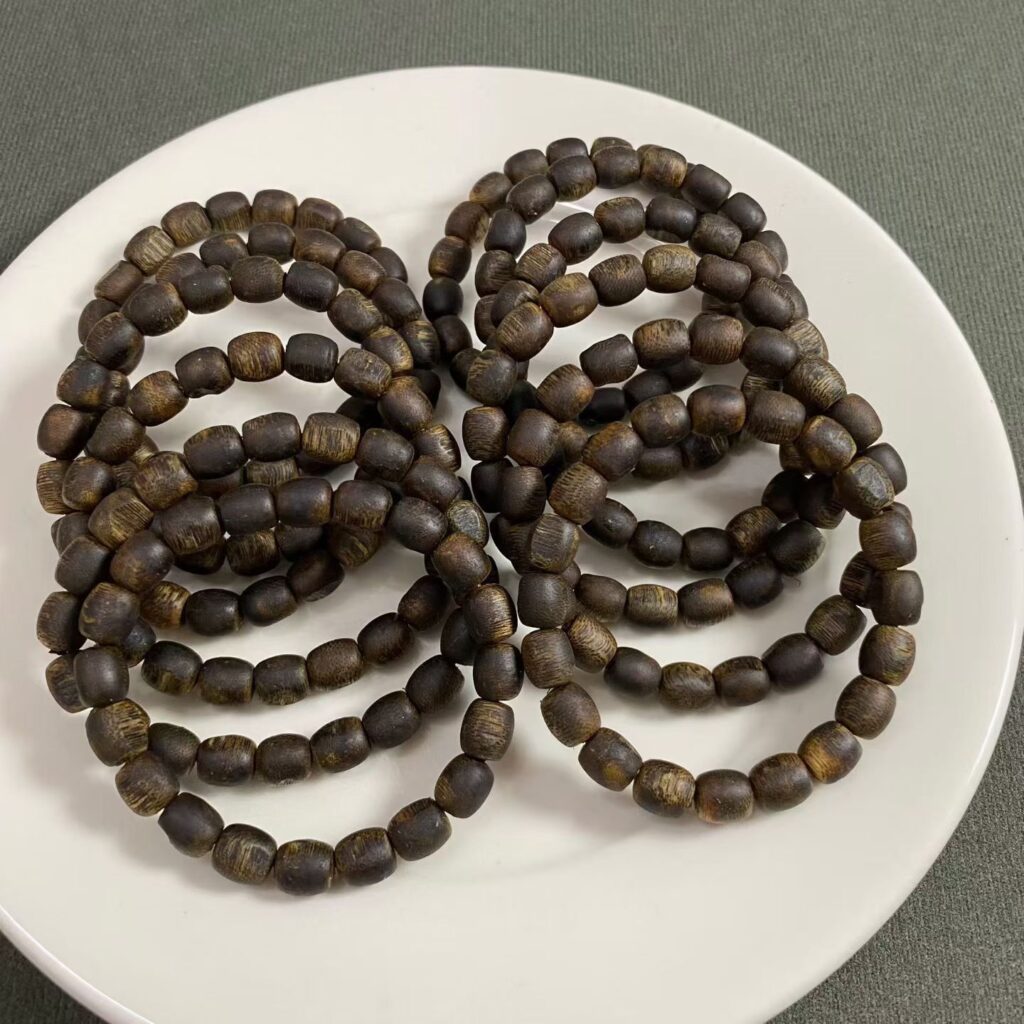
The entire agarwood industry has long been trapped in the low-end circulation track. Over ninety percent of products remain at the primary processing level of bracelets, ornaments, and ordinary incense sticks, while high value-added tracks such as traditional Chinese medicine applications, health and wellness therapy, essential oil extraction, and premium daily chemicals are severely underdeveloped, and enormous industrial value has long been buried. The industry has many small players, small scale, and scattered layout, lacking the drive of leading enterprises; raw material grading, quality standards, and traceability systems are incomplete; investment in germplasm conservation banks, pharmacological research, component testing, and standardized cultivation systems is seriously insufficient; cultural communication focuses only on sales-driven marketing, lacking orthodox, systematic, and source-clarifying fragrance culture education. Everyone is doing business that "makes money now," and no one is willing to build the industrial infrastructure that "yields no short-term profit but lays the foundation for a century." Once the cultural-play boom recedes, the entire industry will directly fall into turbulence, collapse, and reshuffling.
4. Cognitive level: utilitarian mindset across the public, the intrinsic value of agarwood distorted
The public's understanding of agarwood has long been hijacked by get-rich marketing and speculative hype. Most people regard agarwood only as a luxury item, a speculative object, or an appreciating collectible, completely ignoring its thousand-year traditional Chinese medicine properties, health and wellness properties, and everyday incense culture properties. The market is torn between two extremes: on one side, over-mythologized sky-high speculation; on the other, a flood of cheap, inferior commodity goods. The public cannot establish an objective, rational, and correct understanding of agarwood, and the industry long lacks healthy, positive consumer soil. Ultimately, all the chaos, involution, and crises in the agarwood industry stem from collective short-sightedness: everyone fights for today's cake, and no one lays the foundation for the future.
II. With Long-Term Vision, Identify the Core Breakthrough Points for the Industry
True foresight is not idle dreaming about the future, but an active choice: to do what is difficult now but beneficial for the long run; not to exhaust contemporary resources or overdraw future space; to leave roots for the industry and pave the way for future generations. For agarwood to transcend cycles, escape bubbles, and build enduring foundations, it must achieve comprehensive breakthroughs at four dimensions: individuals, bases, the industry, and culture and research.
1. Individual practitioner level: be the industry's "clumsy walker," balancing survival and commitment
The market may have speculation, but individuals cannot be left with nothing but speculation. First, seek survival for livelihood, seek longevity for foundations. Fast-growing varieties can be used to sustain operations, secure income, and respond to the current market. But regardless of scale, one must retain native germplasm conservation forests and traditional tree species resources. Some forests serve the current market; some forests accumulate future value. Never allow one generation to consume all the dividends and cut off all paths for those who follow.
Second, respect natural laws and treat resin formation technology rationally.
Scientific induction of resin formation and quality improvement are acceptable, but violent resin forcing and chemical stimulation that drain the pond to catch the fish must be firmly eliminated. Clearly distinguish circulation commodity goods from matured aged material; do not counterfeit, adulterate, hype, or mislabel. Quick-produced material handles market circulation; time-aged material carries the industry's depth. Each fulfills its role, deceiving neither the market nor one's own conscience.
Third, establish cross-generational business thinking.
Agarwood is a typical cross-generational industry, not a short-term business of one or two years. Excellent agarwood practitioners plant trees not to harvest everything in this lifetime, but to pass them on to later generations. Every decision should be examined from a ten- or twenty-year long-term perspective: Is it worthy of the industry? Is it worthy of future generations? Can it preserve the foundation?
2. Cultivation base level: science as the chassis, building a tiered long-term operating system
First, uphold germplasm conservation and protect the industry's source.
Germplasm is the first lifeline of the agarwood industry. Actively select, retain, and conserve superior native mother trees, build one's own reserve of improved varieties, and do not blindly follow gimmick varieties. Protecting one native tree today is preserving one authentic gene for the industry's future.
Second, plan forest land in tiers, combining long and short cycles to resist risk.
Scientifically divide forest land into three categories:
Circulation production forest — ensuring daily revenue and stable operations;
Quality resin-formation forest — scientifically tended, steadily producing mid-range quality raw materials;
Long-term collection and conservation forest — not rushed to harvest, left for long-term maturation, accumulating heirloom-grade aged material. With long and short combined, fast and slow integrated, one lives in the present while laying out the future, completely escaping dependence on market conditions.
Third, embrace scientific research standards and leave behind experience-based cultivation.
Connect with research systems, follow standardized cultivation, scientific resin formation, and quality management. Replace old experience and old routines with data, standards, and science, making quality controllable, value appreciable, and the industry enduring.
3. Industry circle level: jointly build industry rules and reverse the chaos where "honest people lose out"
Individual commitment can only cultivate oneself; industry rules can establish order in the world.
First, fully implement traceability and grading systems.
One tree, one file; one batch, one trace; one grade, one standard. Disclose tree age, origin, resin formation method, and maturation cycle, and clearly distinguish quick-induced material from naturally matured material. Let good incense command a good price, genuine incense command a premium, those who hold fast be rewarded, and speculators have no space.
Second, break out of cultural-play involution and broaden the entire industrial chain. No longer confine to the narrow track of bracelets and incense sticks. Deepen traditional Chinese medicine, health and wellness therapy, aromatherapy, essential oils, hydrosols, incense tea, and daily chemical cultural creativity, so that agarwood moves from "collectible speculation" to "national health necessity," broadening the industry's base and stabilizing its century-long foundation.
Third, reshape positive industry public opinion.
Dispel get-rich myths, reject hype marketing, and spread the truth about agarwood. Let the public understand the real agarwood cycle, the real value of agarwood, and real fragrance culture.
4. Culture and research level: clarify the source, safeguard the spiritual core of the national fragrance
Agarwood is not a wood business; it is China's thousand-year medicinal incense, ceremonial incense, and cultural incense.
First, clarify the source through education. Remove mysticism, mythology, and bubbles. Output professional, objective, and authentic agarwood knowledge, guide the market to establish correct understanding, and repair the industry's reputation.
Second, deepen long-term scientific research. Invest in pharmacological research, component analysis, and efficacy verification, using modern science to confirm the value of traditional agarwood and establish authoritative support for the industry's long-term development.
Third, revive fragrance lifestyle scenarios. Integrate cultural tourism, study tours, incense ceremony experiences, and forest sightseeing, so that agarwood leaves the collector's cabinet and enters public life, rebuilding the contemporary soil for Eastern fragrance culture.
III. Taking a Moment's Profit Is Limited; Passing Down Generations of Fragrance Is Infinite
In the agarwood industry, there will always be two kinds of practitioners: the short-sighted, who chase immediate profit, overdraw the foundation, and harvest bubbles, ultimately exiting as the industry reshuffles; and the far-sighted, who guard their conscience, germplasm, quality, and culture, taking root in the era and benefiting future generations. A moment's prosperity relies on following trends; a century's foundation relies on commitment. Short-term market conditions may rise and fall, but the industrial foundation must not waver. We do not seek for one generation to earn all the world's dividends; we seek only that germplasm not perish, aroma not cease, cultural lineage not break, and the industry not die.
Today we deeply cultivate a thousand mu of fragrant forest, failing neither the land, nor time, nor the thousand-year national fragrance. Establish the industry with foresight, pass it to future generations with commitment, and let Hainan agarwood have trees in every generation, fragrance in every year, and inheritance through every age.
This article was aggregated and compiled by "Chenxiang Wang"; original source: https://www.chenxiang123.com/chenxiang-chanye-shengchun-zhidao/
Compiled for general knowledge; traditional references are cultural notes, not medical advice.
Frequently Asked Questions
What is The Long-Term Survival Path of the Agarwood Industry?
Across the history of industrial development, nearly all resource-based industries face the same fate: when a wealth boom arrives, short-term opportunism floods in first, while generational foresight remains the preserve of a few.
How should I choose agarwood?
Buy from traceable, testable channels and match the form (incense, beads, raw wood) to your use. Avoid exaggerated claims such as "wild" or "sinking grade" without proof, and prefer products with lab reports and origin documentation.
How should agarwood be stored and maintained?
Agarwood dislikes moisture, odours and direct sunlight. Keep it sealed, dark and cool, store different origins separately, and air and inspect long-stored pieces periodically against mould and insects.
How can I tell real agarwood from fake?
Authentication combines sensory checks with technical ones: natural agarwood has a clean, long-lasting, cool-sweet scent and burns with pale, non-pungent smoke. GC-MS analysis of characteristic compounds (chromones, sesquiterpenes) adds objective confirmation. Buying through traceable channels with certificates lowers the risk.
How do agarwood origins differ?
Climate, tree species and resin-induction methods give each origin a distinct scent profile — for example Hainan tends to be clean and elegant, Vietnam sweet and cool, Indonesia deep and full. Origin is a key factor in grading and pricing.
What is the current agarwood market like?
Prices diverge sharply by resin density, origin and form, with both top-end collectibles and entry-level consumer products active. Use actual transactions from legal, testable channels as reference rather than a single quotation.
What is the relationship between agarwood and incense culture?
Agarwood is the core medium of East Asian incense culture, spanning temple offerings, literati gatherings and contemporary lifestyle aesthetics. Understanding this cultural background helps explain its value.
Does agarwood have health benefits?
Traditionally agarwood has been used for calming and sleep-related rituals, but evidence quality and dosage need careful reading. Keep traditional use and scientific evidence clearly separated and follow professional guidance.
参考资料
You may also like
评论区
评论匿名可浏览,登录后可发表;提交后先审后显。
评论加载中…